
Autor: Shelby Benavidez
Abogado colaborador: Sean Szlachtowski, attorney
Courtroom dramas and legal shows are some of Hollywood’s favorite playgrounds. From Joe Pesci’s unforgettable performance in My Cousin Vinny to Harvey Specter’s swagger in Suits, the law often gets the Hollywood treatment: entertaining but not always accurate.
As practicing trial lawyers, we can’t help but watch these courtroom scenes through a different lens. In this blog, our attorney, Sean Szlachtowski breaks down movie and TV moments, exploring what Hollywood gets right about the law, what it gets wrong, and how real-world trials actually work.
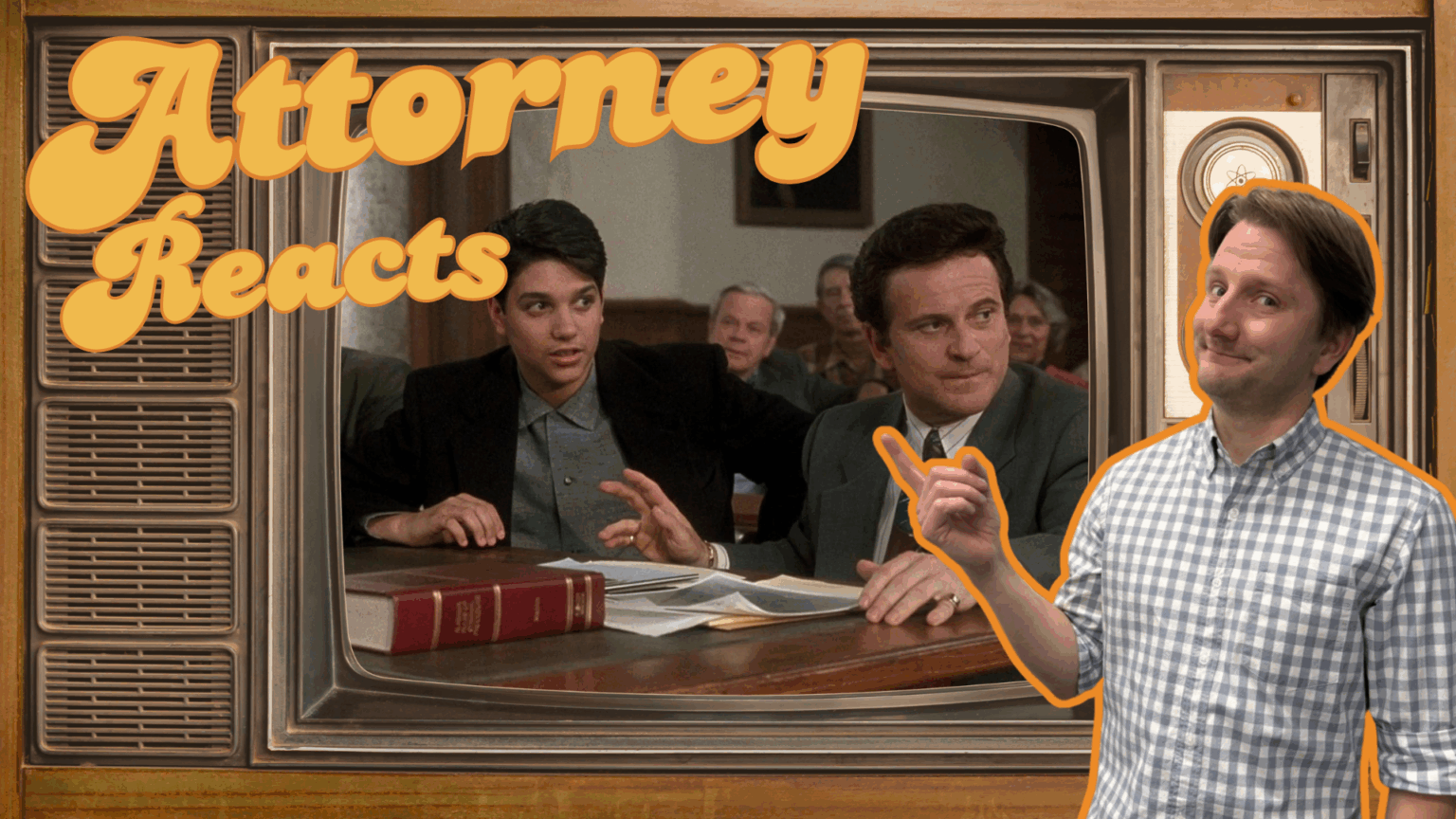
Attorney Reacts to My Cousin Vinny – Courtroom Accuracy Done Right
For attorneys, My Cousin Vinny is a cult classic, and many trial lawyers consider it to be one of the most accurate legal movies ever made. Sure, Vinny’s flashy suits and Brooklyn swagger provide laughs, but the courtroom work itself is surprisingly authentic.
The “Thicker Glasses” Scene
One of the film’s most famous sequences occurs when Vinny cross-examines a witness who confidently insists she saw the defendants commit the crime. First, he asks how far she was standing from the boys when she supposedly saw them committing a crime. Then, he asks her to put on her glasses, takes a tape measure, and measures half the distance she claimed to be from the defendants. He holds up his fingers and asks her to identify how many fingers he is holding up. She said four – it was only two. Through this demonstration, he proves that even with her glasses, she couldn’t reliably identify the suspects.
This is a textbook example of attacking witness credibility. In the real world, a trial lawyer’s goal isn’t necessarily to prove that a witness is lying, but that their testimony is unreliable. Witnesses can be biased, mistaken, or inconsistent, and attorneys use techniques like impeachment to highlight these vulnerabilities.
Vinny’s approach uses the glasses as a demonstrative exhibit to transform an abstract argument into a visual lesson for the jury. Juries often remember what they see more than what they hear, which is why real lawyers frequently rely on props, photos, or charts to support key points.
Szlachtowski used similar interactive techniques as a trial lawyer in homicide trials to demonstrate the limitations of a witness’s perception. Even as a personal injury firm, our attorneys rely on the art of storytelling and demonstration. We can show a reconstruction of the accident, photos of the wreck and the family, and illustrate the impact to tell a story of how the injury has affected their lives.
The key takeaway is that confidence doesn’t always equal accuracy, and credibility is detrimental to an effective testimony.
Expert Testimony: The Surprise Witness
Later in the film, the prosecution attempts to call an undisclosed expert witness. Vinny immediately objects, citing the failure to provide notice.
In real trials, disclosure of expert witnesses is a legal requirement under the rules of discovery. Both sides are required to notify the other of experts they intend to call to maintain fairness and allow adequate time to prepare rebuttals. If an expert is not disclosed, the testimony is typically barred.
In the movie, the judge overrules Vinny’s objection. However, if this were an actual trial, Vinny’s objection would have been on record, preserving grounds for an appeal. If a conviction were handed down, the judge overruling this objection would open the gates for a new trial. This is a rare moment where the movies portray not just courtroom theatrics but also the nuanced strategy of trial lawyers thinking ahead.
The Red Tuxedo
If you’ve seen the film, you remember the red tuxedo. At first, Vinny shows up to court in his everyday clothing featuring a leather jacket and cowboy boots with silver plating on the toe. The judge very blatantly disagrees with his attire and warns him that, the next time he appears, he will look lawyerly. Vinny ruins his tuxedo before the next trial, so he visits the only store in town with an available option: a red tuxedo. The judge in the movie didn’t approve and neither would an actual judge in a real trial. While it was entertaining for viewers, this would never be appropriate in a courtroom.
Courtrooms are formal spaces, and how you present yourself is critical. Judges and juries expect lawyers to appear professional and take their role seriously. Vinny’s flamboyant attire undermines credibility before he even speaks, which is an accurate depiction of what would happen in real life.
The film also highlights the challenge of practicing law in an unfamiliar venue. Lawyers often work across counties, and each jurisdiction has its own jury pool, culture, and unwritten rules. Not knowing the local context can disadvantage a client before the trial begins.
The lesson is clear: preparation, respect for courtroom norms, and professional presentation are as important as legal knowledge.
Lawyer Reacts to Suits – Stylish but Legally Unrealistic
If My Cousin Vinny earns praise for its accuracy, Suits is loved for the opposite. It’s glossy, witty, and endlessly entertaining, but according to our attorneys, the show often sacrifices realism for drama.
The “I Do Everything” Myth
Harvey Specter and Mike Ross appear to handle every type of law imaginable: corporate mergers, criminal defense, class actions, intellectual property disputes, and more. In reality, this almost never happens because lawyers specialize. At large firms, attorneys are typically divided between litigation (lawsuits, trials, disputes) and transactional law (contracts, deals, negotiations). Within those broad categories, attorneys narrow their focus even further, specializing in areas like securities litigation, employment law, or personal injury law.
No one lawyer can master every area of law, and the show’s portrayal of generalist “do-it-all” attorneys is purely a Hollywood invention. The reality is that most lawyers develop expertise in a single practice area and build their careers around it.
The Taxi Driver Case
One episode shows Harvey facing a taxi driver representing himself in court in a civil suit after a car accident. In general, you are allowed to represent yourself in court; it’s called proceeding pro se, but it’s highly inadvisable. Attorneys “practice law” because it’s an ever-changing field. Lawyers are constantly growing their knowledge and skills over the years and even decades. Trial law involves strict rules of evidence, procedural deadlines, and complex filing requirements – even minor errors can jeopardize a case.
However, in a civil suit involving an insurance company after a car accident, like the case displayed in this episode, representing yourself as the defendant would almost never happen. If you’re found at fault for the accident, it’s the insurance company’s money at stake. They will provide a team of lawyers to control the defense to protect their pockets as much as possible.
The scene serves as dramatic storytelling but oversimplifies the complexity and risks of litigation. Yes, representing yourself is technically legal, but in practice, it’s often fatal to the case.
What Lawyers Say About Rainmaker – Realism in the Details
Francis Ford Coppola’s Rainmaker, adapted from John Grisham’s novel, doesn’t have the flash of Suits or the comedy of My Cousin Vinny, but it honestly nails some of the realities of the legal system.
The New Judge
A memorable scene shows a newly appointed judge taking over a case after the previous judge passes away. The case involves a powerful insurance company, and the defense attorneys are frustrated because they have lost the advantage of a familiar, more accommodating judge. Suddenly, the courtroom dynamics have changed, and everyone must adjust.
This situation reflects real-life courtroom experiences. Judges are expected to be neutral, but each one has their own style and approach. Some are strict about procedure, others are more flexible; some move cases quickly, while others take a slower pace. A new judge stepping in can change the rhythm of a trial and how attorneys approach their strategy.
Experienced trial lawyers know that success in court depends not only on understanding the law but also on understanding the judge. Lawyers often research a judge’s past rulings, courtroom style, and tendencies before trial. This preparation helps them adapt their arguments, objections, and overall strategy to match the judge’s temperament.
Just as Vinny’s red tuxedo served as a reminder that presentation and awareness matter in court, this scene reinforces a similar idea from a different angle. Here, the challenge isn’t what you’re wearing, but who’s on the bench and what courtroom dynamics you’re stepping into.
Verdict on Hollywood vs. Real Law
Hollywood courtroom dramas thrive because the stakes are high and the conflicts dramatic. But as this “lawyer reacts” breakdown shows, the line between fact and fiction is thin.
My Cousin Vinny earns praise for capturing real trial strategies like witness impeachment and preserving issues for appeal. Suits entertains but stretches credibility with its “do everything” lawyers and unrealistic courtroom showdowns. Rainmaker may not be flashy, but it accurately captures the way judges shape trials and the pursuit of justice.
In the real world, the law is less about theatrics and more about credibility, preparation, and respect for process. Whether you’re a fan of legal dramas or just curious about courtroom accuracy, remember this: the true drama of the legal system isn’t in surprise witnesses or red tuxedos – it’s an attorney’s experience and dedication that makes justice possible.