Autor: Shelby Benavidez
Abogado colaborador: Arash Karimi, attorney
Winter doesn’t look the same for all states, but even the South sees some icy weather occasionally! Unfortunately, no matter how beautiful snowy days can be, they bring hidden dangers, especially on sidewalks, parking lots, and entryways. Millions of people every year slip on ice or snow and suffer painful injuries, ranging from bruises and sprains to broken bones and head trauma. These accidents can happen anywhere – outside your home, at work, or while running everyday errands.
Understanding why slip-and-fall accidents increase during winter, how to avoid them, and what to do if you’re hurt can make a major difference in your safety and recovery. Here are some common causes, prevention tips, legal rights, and when it may be possible to file a lawsuit.
Why Winter is a Prime Time for Slip-and-Fall Accidents
Ice and Snow
From slick sidewalks to frost-covered stairs, people face risks every time they walk outdoors during the winter. Ice and snow buildup is the number one cause of winter slip-and-fall injuries. Fresh snow may look soft and inviting, but it can hide patches of ice underneath. Even worse, temperatures often rise and fall, melting snow during the day and freezing it again at night. This process creates thin “black ice,” nearly invisible to the eye.
Parking lots, sidewalks, and steps can all become hazardous. If walkways are not properly cleared or treated with salt or sand, pedestrians are at high risk for unexpected falls. Some people fall because they assume the ground is safe – until their feet slide out from under them.
Low Visibility
Due to daylight savings time, daylight hours are shorter during the winter; many people are leaving work and driving home after the sun has already set, making visibility in slick parking lots or on icy sidewalks much more difficult. Not to mention, frequent cloudy weather, snowstorms, and heavy fog can also block the view of slippery surfaces.
Slippery Floors
While people may run inside eager to escape the cold, they may not realize the hazards of a slick floor! In places like store entrances, office lobbies, or even your own home, people are walking in and out, tracking ice and snow through entryways. Once this snow melts, wet tiles or slick hardwood floors create a dangerous, slippery environment.
Businesses are supposed to handle indoor hazards by placing floor mats at the entry, cleaning frequently, and using caution signs for wet floors. Unfortunately, not all property owners take proper precautions, and people often fall just feet away from a doorway.
How to Prevent Slip-and-Fall Accidents on Ice or Snow
Wear Proper Footwear
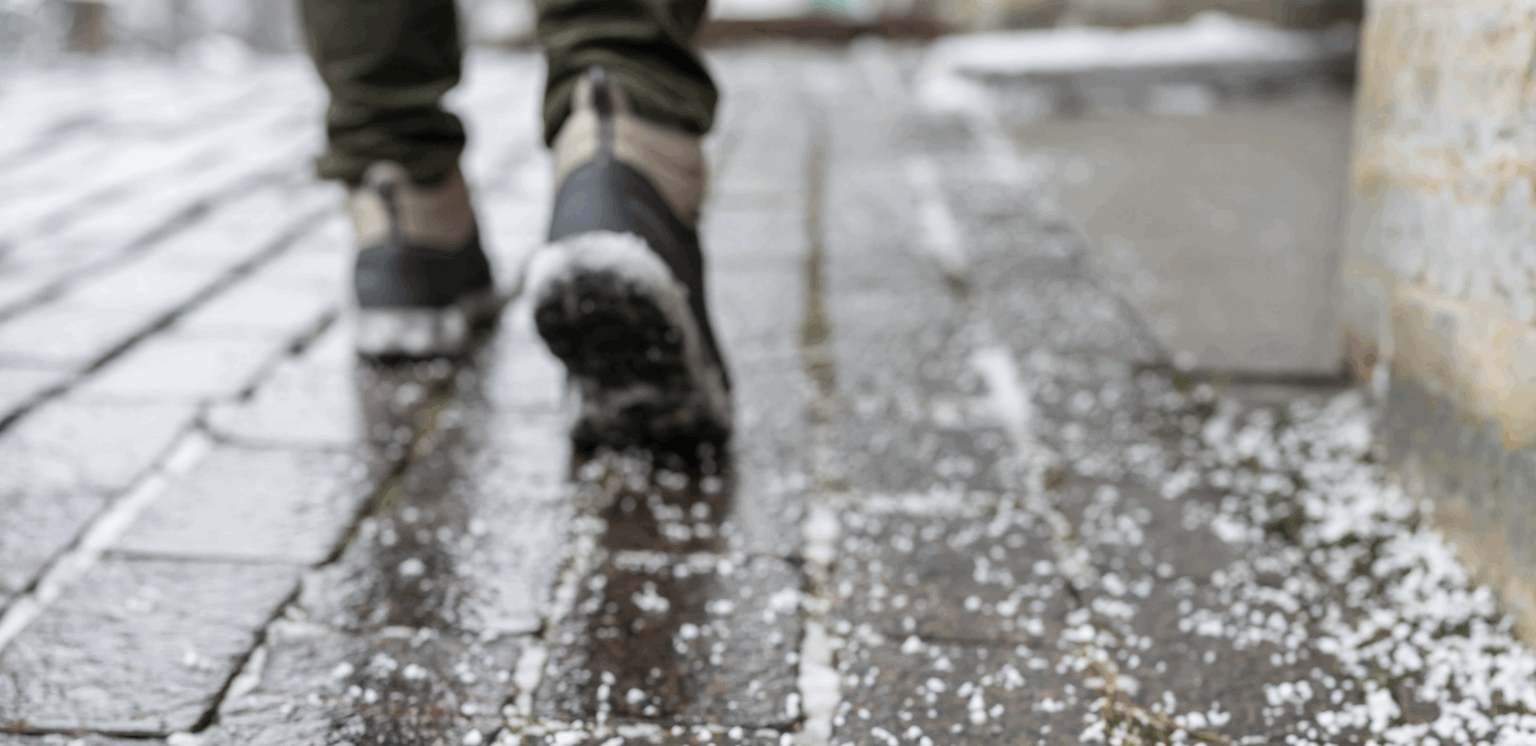
Although you can’t control the weather, you can take simple steps to reduce your risk of injury – footwear being one of the most important safety tools in winter. Shoes and boots with non-slip soles, deep treads, and proper support help you stay balanced on icy surfaces.
Avoid smooth-bottomed shoes or high heels when walking outside. Even if you’re heading into the office, pack your dress shoes in a bag and change once you’ve made it safely inside. If you live in a region with harsh winters, you might also consider add-on traction cleats for extreme icy conditions.
Take Small Steps
Walking slowly and taking short, careful steps helps maintain balance on slippery surfaces. It may sound silly, but walking like a penguin can help you keep your center of gravity. Point your toes out, bend slightly at the knees, and make small steps forward. Rushing is one of the biggest reasons people fall. Try to give yourself extra time to safely get to your destination – even if you’re running late, prioritize your safety over tardiness.
Be Extremely Cautious on Steps y Stairs
Steps and staircases are especially dangerous when covered in snow or ice, and one misstep can lead to serious injury. Try to always use the handrail if there’s one available, but be cautious of ice accumulation on that, as well. Clear any snow before taking a step, and place your foot carefully on each step before shifting your weight – take a single step at a time. Even indoors, stairways can become wet from melted snow. Walk slowly to avoid slipping.
What to Do If You Are Injured in a Winter Slip-and-Fall Accident
Buscar Medical Attention
Some injuries are obvious, like broken bones, bleeding, or severe pain. Others, like concussions or internal injuries, may not show symptoms right away. Always seek medical care, even if you think you feel fine. A doctor can diagnose injuries, prevent complications, and provide documentation that may be useful if you decide to file an injury claim.
Take Photos of the Scene y Your Injuries
Taking photos of the scene may be the last thing on your mind after a fall, but photo evidence may be crucial if you plan to pursue a personal injury claim later on. If you are able, take pictures of the area where you fell, and be sure to document if there was any ice or snow on the ground. If the fall happened inside a building, document whether or not there was a caution sign present. Finally, if you suffered an injury as a result of the fall, take photos of those, too.
These photos can help show how and why the fall happened. Conditions can change quickly; snow melts, ice gets salted, and property owners may fix hazards before anyone investigates. Photos taken immediately after the accident preserve crucial evidence.
Contact a Personal Injury Attorney
Not all slip-and-fall accidents are due to the negligence of someone else, but when they are, cases involving ice can be complicated. Property owners, managers, and insurance companies may blame the victim or deny responsibility. A abogado de lesiones personales can help determine if negligence was present, gather evidence, communicate with all insurance companies, and file a lawsuit on your behalf, if necessary.
Dealing with an injury can be frustrating and overwhelming, but you don’t have to navigate the legal process alone. An attorney can guide you from the first call to final settlement or court case.
When Can You Sue for Slipping on Ice?
Public Property
Many people assume slip-and-fall accidents are “just bad luck.” While weather conditions are a factor, property owners still have a legal duty to maintain reasonably safe conditions. However, whether you can sue depends on where the fall happened and if someone was negligent.
Cities and municipalities in some jurisdictions may be responsible for maintaining sidewalks, bus stops, and public pathways, but filing a claim against a government agency often has strict deadlines and procedural rules.
To win a case, you usually need to show that the city knew (or should have known) about the icy hazard and had time to fix it but failed to do so. You’ll also have to prove that this negligence was the direct cause of your injury. A lawyer can help determine whether your situation meets these standards.
Businesses
Business owners of stores, malls, hotels, and office buildings may be responsible for clearing snow and ice from parking lots, walkways, and entrances. They may also be expected to use salt, warning signs, or mats to reduce risk. If a business ignored known hazards, failed to act in a reasonable time, or did not warn customers about danger, you may have grounds for a claim.
Business insurance policies typically cover these types of injuries, but adjusters often try to minimize payouts. That’s another reason why legal support is useful.
Private Property
Slip-and-falls due to ice or snow on private property can be a bit more challenging. Homeowners, landlords, or even tenants may be responsible for taking reasonable steps to remove snow and ice from their driveways, so if you fall at someone’s home or apartment building, you may be able to file a claim through their homeowner’s, landlord’s, or rental insurance.
This may apply if the walkway was not shoveled or salted, the steps or handrails were unsafe, or the lighting was poor. People sometimes hesitate to file claims against someone they know, but the claim is typically paid by insurance, not the individual.
It is important to note that the property owner isn’t always responsible. In these situations, take advantage of a free consultation with a personal injury attorney to determine if you have a case.
Final Thoughts: How to Deal with Winter Slip-and-Fall Injuries
Winter can be beautiful, but icy sidewalks and parking lots create real risks. When you take the time to understand how these accidents happen, what steps you can take to prevent them, and your rights after a fall, you can feel more safe and informed during icy weather.
If you suffer an injury from slipping on ice, don’t ignore it. Get medical care, document conditions, and consider speaking with an attorney. You may be entitled to compensation for medical bills, lost wages, and pain and suffering.