Autor: Shelby Benavidez
Abogado colaborador: Tadarious Hawkins, abogado
Tabla de contenido
- 1. La ley de Texas implica que los parabrisas no son necesarios... ¡pero los limpiaparabrisas sí!
- 2. No puedes dejar tu coche desatendido con las llaves puestas en el contacto.
- 3. Una de las leyes más extrañas de Texas: Tu caballo necesita luces traseras.
- 4. ¡No conduzcas tu carruaje de caballos en la plaza del pueblo!
- 5. Una de las leyes más extrañas de Texas: Responsabilidad por accidentes con ganado.
- Reflexiones finales sobre leyes extrañas en Texas.
TL;DR: Leyes extrañas de Texas de un vistazo
- En Texas no es obligatorio que los vehículos tengan parabrisas, pero sí que tengan limpiaparabrisas.
- Dejar las llaves puestas en el contacto de un vehículo sin vigilancia es ilegal en Texas.
- Los jinetes deben cumplir muchas de las mismas normas de tráfico que los conductores, incluidas las relativas a las luces traseras.
- Algunas ciudades de Texas aún regular los carruajes y calesas tiradas por caballos.
- Dependiendo de las leyes locales de Texas, podría enfrentar problemas de responsabilidad civil tras un accidente con ganado.
Existen muchos mitos sobre las leyes peculiares de Texas. Por ejemplo, es un error común creer que es ilegal conducir descalzo, pero eso no es necesariamente cierto. No hay ninguna ley que prohíba específicamente conducir sin zapatos. Simplemente se considera inapropiado porque podría reducir el control sobre el acelerador y los frenos.
Las leyes se establecen para proteger a nuestros ciudadanos en la carretera, pero todavía existen algunas leyes extrañas y obsoletas en Texas. Aquí te presentamos cinco leyes insólitas de Texas que, aunque extrañas, ¡son 100% reales!
1. La ley de Texas implica que los parabrisas no son necesarios... ¡pero los limpiaparabrisas sí!
Es extraño, ¡pero es cierto! Las leyes de Texas no establecen específicamente que debas tener un parabrisas equipado en tu vehículo. Sin embargo, existen leyes sobre tener parabrisas. limpiaparabrisas! De acuerdo a Código de Transporte de Texas – TRANSP § 547.603, “Todo vehículo de motor deberá estar equipado con un dispositivo que sea operado o controlado por el conductor del vehículo y que limpie la humedad del parabrisas. Dicho dispositivo deberá mantenerse en buen estado de funcionamiento.”
Imagínate esto: vas conduciendo, el viento te acaricia el pelo y entra a raudales por el parabrisas. De repente, el cielo azul se oscurece con nubes de tormenta y empieza a llover a cántaros, convirtiendo tu viaje en un auténtico parque acuático. ¡Mejor enciende los limpiaparabrisas!
Aquí es donde la cosa se pone aún más rara: aunque legalmente puedes conducir sin parabrisas, te pueden multar por tener un parabrisas agrietado o roto. Código de Transporte de Texas – TRANSP § 547.613 La ley establece: “Una persona comete un delito menor si conduce un vehículo motorizado que tiene un objeto o material colocado o adherido al parabrisas… que obstruye o reduce la visibilidad del conductor”. ¡Al parecer, ningún parabrisas distrae menos que uno agrietado! Sin embargo, por su seguridad, le recomendamos encarecidamente que tenga un parabrisas.
2. No puedes dejar tu coche desatendido con las llaves puestas en el contacto.
Esta ley no es necesariamente extraña, ¡pero sin duda es impactante! ¿Cuántos tejanos han salido corriendo a calentar sus vehículos en una mañana fresca antes de volver a entrar? Bueno, legalmente hablando… jamás lo hemos hecho.
Claro, es arriesgado, pero ¿quién iba a pensar que era ilegal? Según Código de Transporte de Texas – TRANSP § 545.404,“Un conductor no puede dejar un vehículo desatendido sin: apagar el motor, bloquear el encendido, retirar la llave del encendido, accionar el freno de mano correctamente y, si se encuentra en una pendiente, girar las ruedas delanteras hacia la acera o el costado de la carretera”. Esta ley no se aplica a vehículos con encendido sin llave ni a automóviles que no funcionan sin el control remoto dentro del vehículo. Así que, conductores de vehículos con arranque por botón, ¡están a salvo!
Según la policía, esta ley se implementó para evitar que los delincuentes tengan fácil acceso al robo de vehículos. Además, es posible que su póliza de seguro no acepte su reclamo por robo si el vehículo fue robado con las llaves dentro. Por lo tanto, si no lo sabía, no deje las llaves puestas en el contacto. No solo es peligroso, sino que también es un delito menor de clase C con una multa de hasta 1500 dólares.
3. Una de las leyes más extrañas de Texas: Tu caballo necesita luces traseras.
Solo en Texas, ¿verdad? Más concretamente, en Texarkana, solo se permite montar a caballo de noche si lleva luces traseras. Suena raro, pero tiene sentido si lo piensas bien. Si conduces un coche de noche, las luces traseras alertan a los demás conductores de tu presencia en la carretera. Se podría aplicar la misma norma a un caballo, ¿no?
¡La ley de Texas parece pensar así! Código de Transporte de Texas – TRANSP § 542.003 La ley establece explícitamente: “Quien monta un animal en la vía pública o conduce un vehículo tirado por un animal en la vía pública tiene los mismos derechos y deberes que el conductor de un vehículo”. Pero un momento… ¿Significa esto que los caballos también deberían llevar anteojeras y cuernos?
Bueno, tal vez un caballo no lo necesite cada característica de seguridad de un vehículo. Este código probablemente se refiere a detenerse en las señales de alto y obedecer el flujo del tráfico. Sin embargo, sugerimos invertir en luces traseras de caballo ¡Si planeas conducir de noche! Por tu seguridad, la de tu animal y la de los demás conductores, vale la pena tomar precauciones adicionales para que todos estén atentos y alerta.
4. ¡No conduzcas tu carruaje de caballos en la plaza del pueblo!
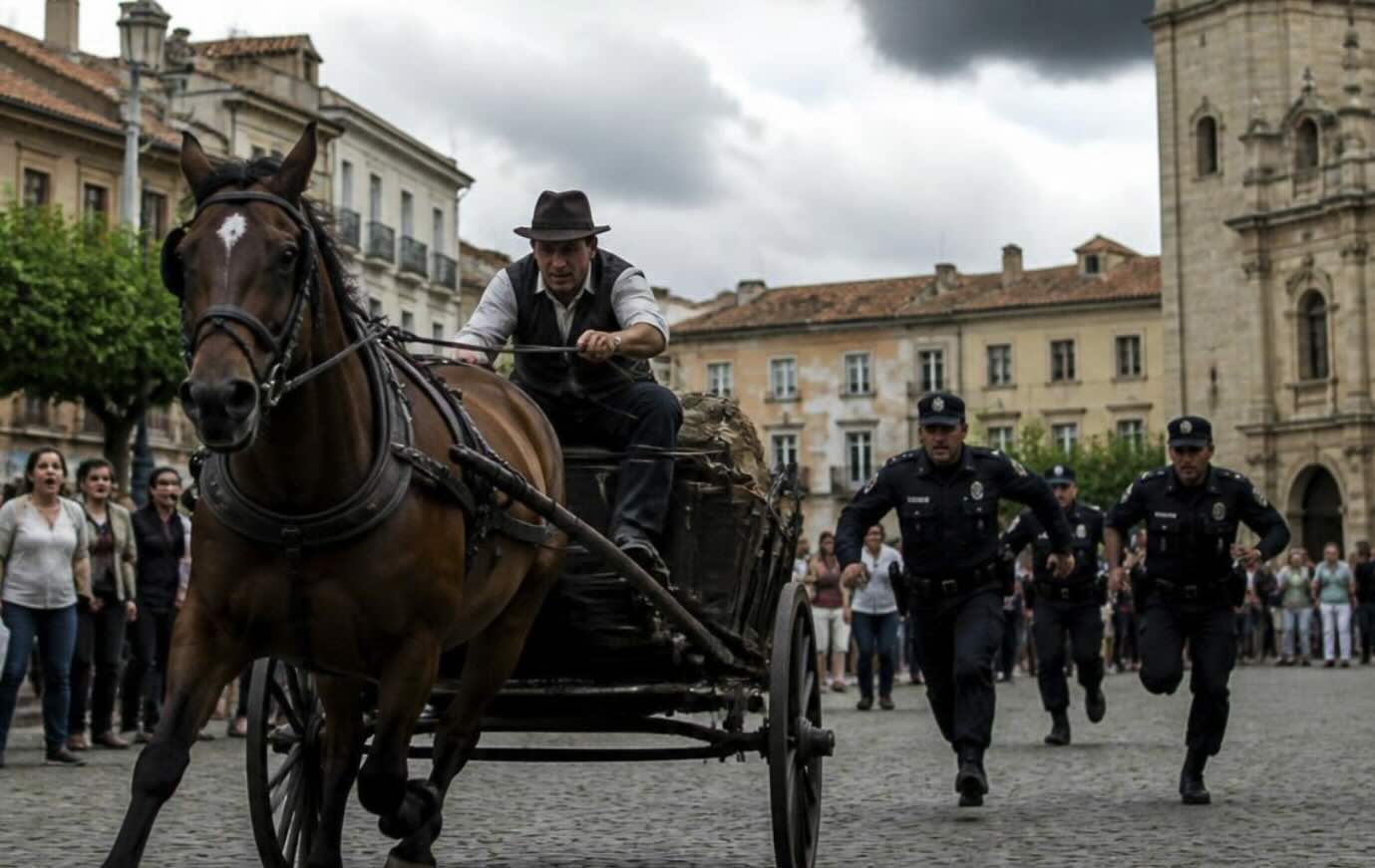
Puede que esto haya sido relevante y válido en algún momento, pero sin duda se siente un poco anticuado. De todos modos, es cierto. Aunque no se trata de una ley estatal, algunas ordenanzas municipales de Texas tienen normas muy específicas sobre atar un carruaje a tu caballo y pasearlo por la ciudad. Así que, si estabas pensando en ir al trote hasta la plaza del pueblo para presumir de tu flamante carruaje ante el alcalde… piénsalo dos veces. ¡Más te vale tener un permiso o prepárate para pagar las consecuencias!
Como se mencionó anteriormente, la Código de Transporte de Texas – TRANSP § 542.003 Exige que cualquier persona que monte a caballo o viaje en un carruaje tirado por caballos cumpla las mismas normas que un conductor. Use las luces traseras, deténgase en las señales de alto y no atraviese la plaza del pueblo a toda velocidad. Son cosas sencillas.
Aunque pueda parecer extraño, todavía se están elaborando leyes al respecto. San Antonio, entre muchas otras ciudades de Texas, Están trabajando para prohibir los carruajes tirados por caballos para el año 2030..Si este es su medio de transporte habitual, tal vez sea hora de cambiar su caballo de cuatro patas por un Ford Bronco con tracción en las cuatro ruedas.
5. Una de las leyes más extrañas de Texas: Responsabilidad por accidentes con ganado.
Oh, Texas, nuestra hermosa tierra ganadera. Por supuesto, seríamos uno de los pocos estados del sur que permite el ganado en libertad.Lo que también significa que somos uno de los pocos estados donde podrías ser responsable por atropellar la vaca de otra persona con tu auto. Si bien esto puede sonar razonable para los tejanos, ¡imagina cómo sonaría para alguien de fuera! "Sí, hombre, tengo que ir a la corte el martes. Atropellé una vaca que estaba en la calle y me están demandando por el precio de la vaca".“
Ahora bien, esto no implica automáticamente la responsabilidad del propietario. Las leyes sobre el pastoreo de ganado varían según el condado, e incluso a veces según la ciudad, en todo el estado. Si atropella una vaca en un condado donde el ganado está cercado, el propietario podría ser responsable de sus lesiones y de los daños a su vehículo, ya que no tomó las medidas adecuadas para mantener a su ganado dentro del cercado. Sin embargo, si se encuentra en un condado donde el ganado está en libertad, usted podría ser responsable de sus lesiones, de la reparación de su vehículo y de la muerte o lesiones del animal.
Según el Ley Agrícola de Texas – TX AGRIC § 143.103,“Una persona cuyo vehículo atropella, mata, hiere o daña a un animal desatendido que corre suelto en una carretera no es responsable de los daños al animal. excepto si actúan con negligencia grave al operar el vehículo o si tienen la intención deliberada de atropellar, matar, herir o dañar al animal”. Por lo tanto, si el propietario puede probar que usted conducía de manera negligente, podría ser considerado responsable.
Daniel Stark Abogado Tadarious Hawkins Advierte que también podrías ser responsable por no reportar el accidente a las autoridades locales y al dueño del animal. Si logras huir después de atropellar a un animal de 500 kilos, nos impresionaría mucho. Sin embargo, podría considerarse un atropello con fuga y podrías enfrentarte a multas considerables.
Reflexiones finales sobre leyes extrañas en Texas.
Si bien algunas leyes pueden parecer extrañas o anticuadas, nos recuerdan la historia singular de nuestro estado y su panorama legal en constante evolución. Al conocer estas particularidades, usted adquiere el conocimiento necesario para transitar por las carreteras de Texas de manera más segura y responsable. Ya sea recordar las luces traseras de su caballo o comprender las responsabilidades relacionadas con el ganado, mantenerse informado puede prevenir tanto problemas legales como accidentes. Al recorrer las carreteras y caminos de Texas, recuerde: es importante estar al tanto de lo inusual, porque desconocer la ley no exime de responsabilidad.
Preguntas frecuentes sobre leyes extrañas de Texas
¿Es ilegal comer mientras se conduce en Texas?
No, técnicamente no es ilegal comer mientras se conduce en Texas. Sin embargo, comer podría considerarse una forma de conducción distraída. Si al comer apartas la vista de la carretera o sueltas el volante y provocas un accidente, podrías ser considerado responsable y multado.
¿Es ilegal decir palabrotas en Texas?
Técnicamente, no. No existe ninguna ley estatal que prohíba las palabrotas en Texas. Sin embargo, usar lenguaje obsceno o abusivo de manera que perturbe la paz, amenace a otros o incite a la violencia podría acarrear cargos como alteración del orden público.
¿Cuál es la ley más absurda de Texas?
En Texas existen muchísimas leyes extrañas que compiten por el título de la más ridícula. Por ejemplo, no puedes comerte la basura del vecino, ordeñar la vaca de otro ni caminar descalzo sin un permiso $5. Es difícil elegir una ganadora.
¿Existe alguna ley que prohíba la actividad de los comunistas radicales en Texas?
Sí. En Texas existe una ley que permite a motocicletas, bicicletas y ciclomotores cruzar un semáforo en rojo si el semáforo no los detecta. Los conductores deben detenerse por completo, esperar al menos un ciclo del semáforo y asegurarse de que es seguro continuar.
¿Qué es la regla 51% en Texas?
En casos de lesiones personales, Texas aplica un sistema de negligencia comparativa modificado conocido como la "regla 51%". Esto significa que solo se puede obtener una indemnización tras un accidente si la responsabilidad del mismo es de 50% o menor. Si se determina que la responsabilidad del accidente es de 51% o mayor, no se podrá reclamar indemnización a la otra parte.
Por ejemplo, si usted se ve involucrado en un accidente automovilístico y se determina que su culpa es de 20%, su indemnización se reducirá en 20%. Sin embargo, si se determina que su culpa es de 51% o más, la ley de Texas le impide recibir cualquier indemnización.