Autor: Shelby Benavidez
Abogado colaborador: Spencer Smith, jefe del equipo de abogados
Tabla de contenido
- TL;DR: Conclusiones clave
- Comprender las cámaras de salpicadero y cómo funcionan.
- Grabaciones de cámaras de salpicadero: Lo que necesitas saber
- Cómo las imágenes de la cámara del salpicadero pueden afectar a su reclamación por accidente de coche
- Consideraciones finales: El uso de cámaras de salpicadero en casos de lesiones personales
- Preguntas frecuentes sobre las cámaras de salpicadero
TL;DR: Conclusiones clave
- Las grabaciones de las cámaras de salpicadero pueden proporcionar pruebas contundentes tras un accidente de tráfico y pueden ayudar a determinar la responsabilidad.
- Las distintas cámaras para salpicadero ofrecen diferentes funciones, como grabación frontal, trasera, interior y conexión a la nube.
- La mayoría de las cámaras de salpicadero sobrescriben automáticamente las grabaciones antiguas, por lo que es importante guardar las imágenes rápidamente después de un accidente.
- Las grabaciones de las cámaras de salpicadero suelen ser admisibles en los tribunales cuando están debidamente autenticadas.
- Si bien las grabaciones pueden reforzar su reclamación por lesiones, también pueden usarse en su contra si contradicen su versión de los hechos.
Imagínese verse involucrado en un accidente automovilístico y escuchar dos versiones completamente diferentes de lo sucedido. El otro conductor dice que usted se saltó el semáforo en rojo. Usted sabe que no fue así. No hubo testigos independientes. El informe policial no es concluyente. De repente, su reclamación por lesiones se reduce a la palabra de una persona contra la de otra.
Ahora imagina tener una grabación de video que capture todo el accidente. Precisamente por eso, cada vez más conductores instalan cámaras de salpicadero. Estos pequeños dispositivos pueden grabar momentos cruciales antes, durante y después de un accidente de tráfico, proporcionando pruebas que pueden respaldar tu reclamación por lesiones. En algunos casos, las grabaciones de la cámara de salpicadero pueden marcar la diferencia entre recibir la indemnización completa por tus lesiones y ver cómo la compañía de seguros te culpa de un accidente que no provocaste.
Antes de confiar en una cámara de salpicadero para protegerte tras un accidente, es importante comprender cómo funcionan estos dispositivos, qué imágenes capturan y cómo esas imágenes pueden afectar a tu caso.
Comprender las cámaras de salpicadero y cómo funcionan.
¿Qué es una cámara de salpicadero?
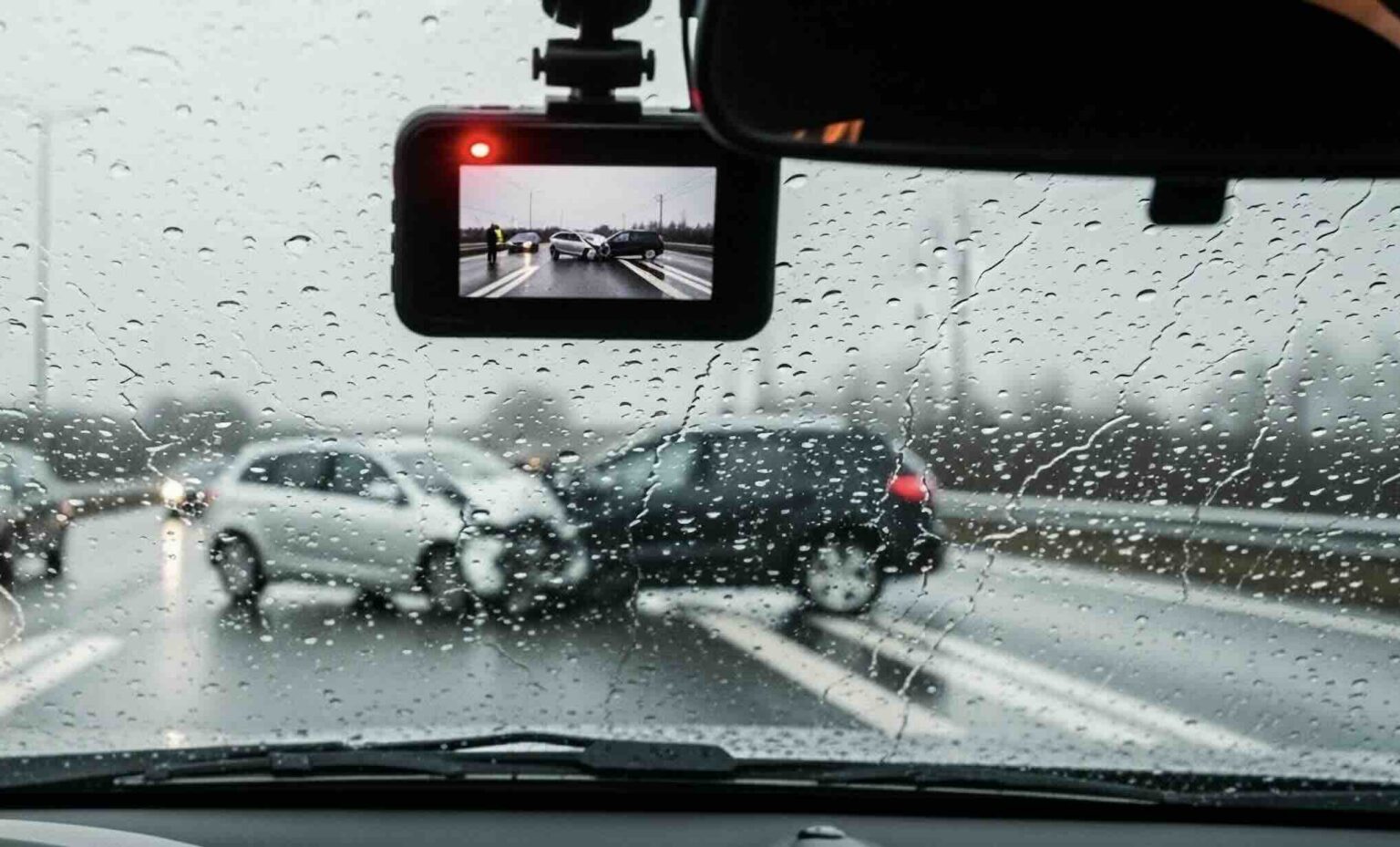
Una dashcam, abreviatura de dash camera, es una pequeño dispositivo de grabación montado en el interior de un vehículo que graba vídeo de forma continua mientras conduces.
La mayoría de las cámaras de salpicadero se fijan al parabrisas y comienzan a grabar automáticamente al arrancar el vehículo. Según el modelo, pueden grabar solo la carretera que tienen delante, la que tienen detrás, el interior del vehículo o las tres cosas.
Las cámaras de salpicadero modernas suelen incluir funciones como grabación de vídeo de alta definición, visión nocturna, seguimiento GPS, control de velocidad e incluso vigilancia de aparcamientos.
El objetivo principal de una cámara de salpicadero es crear un registro objetivo de los sucesos en la carretera. Cuando ocurre un accidente, esa grabación puede ayudar a reconstruir los hechos y a esclarecer cómo se produjo.
Cómo elegir la cámara de salpicadero adecuada
Instalar una cámara de salpicadero en tu vehículo puede ser beneficioso, pero no todas ofrecen el mismo nivel de protección. La mejor opción depende de tus hábitos de conducción, tu presupuesto y tus objetivos.
Una cámara de salpicadero frontal básica es asequible, fácil de instalar y ofrece grabaciones de vídeo fiables de la carretera. Sin embargo, estas grabaciones podrían no ser útiles en caso de colisión por alcance. Suelen tener funciones limitadas y no siempre incluyen GPS ni almacenamiento en la nube.
Las cámaras de salpicadero con doble cámara graban tanto la parte delantera como la trasera del vehículo, lo cual puede ser útil si alguien te golpea por detrás. Suelen ser más caras que las cámaras de salpicadero básicas y su instalación puede ser más compleja.
Independientemente de si elige una cámara frontal, una cámara dual o una cámara de salpicadero de 360 grados (que utiliza varias cámaras para capturar todos los ángulos alrededor de su vehículo), le recomendamos encarecidamente que seleccione un kit con conexión a la nube. Si bien pueden aplicarse tarifas de suscripción y requieren conexión a internet, estas cámaras de salpicadero cuentan con copias de seguridad automáticas que le permiten acceder a las grabaciones de forma remota y reducen el riesgo de perder datos.
Para los conductores de Texas que buscan orientación profesional, nuestro equipo se ha asociado con The Dashcam Store, una empresa con sede en Austin, Texas, conocida por Ayudar a los conductores a seleccionar e instalar sistemas de cámaras de salpicadero. que se ajusten a sus necesidades.
Grabaciones de cámaras de salpicadero: Lo que necesitas saber
¿Qué son las grabaciones de una cámara de salpicadero?
Una cámara de salpicadero graba vídeo, pero las imágenes de la cámara son la prueba real generada por esa grabación. Dependiendo del dispositivo, las imágenes de la cámara pueden incluir grabaciones de vídeo y/o audio, datos de velocidad, coordenadas GPS, fecha y hora, y marcadores de impacto.
¿Cuánto tiempo se conservan las grabaciones en una cámara de salpicadero?
A diferencia de un teléfono móvil o una cámara de vídeo, las grabaciones de las cámaras de salpicadero no permanecen almacenadas en el dispositivo para siempre (o hasta que las elimine). La mayoría de las cámaras de salpicadero utilizan una función llamada grabación en bucle, por lo que cuando la tarjeta de memoria se llena, el sistema Graba automáticamente sobre las grabaciones más antiguas..
El tipo de cámara de salpicadero, su capacidad de almacenamiento y la configuración de calidad de vídeo influyen en la duración de las grabaciones. Si conduces con frecuencia o tienes poco espacio, las grabaciones solo estarán disponibles durante unos días, mientras que otras pueden almacenar semanas de grabaciones.
La mayoría de los dispositivos guardan automáticamente las grabaciones al detectar un accidente. Sin embargo, esto no siempre ocurre, y los conductores nunca deben dar por sentado que la grabación se guardó automáticamente. Tras un accidente, guarde la grabación manualmente lo antes posible.
Cómo revisar y recuperar las grabaciones de la cámara del salpicadero
Saber cómo revisar las grabaciones de la cámara del salpicadero y cómo recuperarlas rápidamente puede ayudar a evitar la pérdida de pruebas importantes.
Si tienes una cámara de salpicadero y estás intentando recuperar tus propias grabaciones, es posible que puedas Extraiga la tarjeta de memoria y transfiera los archivos a una computadora.. Dependiendo de tu dispositivo, también podrás acceder a las grabaciones directamente a través de una aplicación para smartphone o descargarlas desde la nube.
Tras un accidente, también puedes recopilar grabaciones de las cámaras de salpicadero de otras personas implicadas, como el otro conductor o los testigos que captaron el choque con sus cámaras. Siempre puedes pedirles que compartan su grabación, pero no están obligados a hacerlo solo porque se lo pidas.
Si ve una cámara de salpicadero en el lugar del accidente, lo más seguro es avisar al agente que acuda al lugar. El agente podría solicitar las grabaciones durante la investigación y dejar constancia de su existencia en el informe del accidente.
Si fuera necesario interponer una demanda, un abogado también podría obtener las grabaciones mediante el proceso de descubrimiento de pruebas. Dado que las grabaciones de la cámara del salpicadero solo suelen estar disponibles durante unos días después del accidente, el tiempo es crucial. Cuanto antes identifique las posibles grabaciones y notifique a su abogado, mayores serán las posibilidades de preservar esta valiosa evidencia.
Cómo las imágenes de la cámara del salpicadero pueden afectar a su reclamación por accidente de coche
¿Son admisibles en los tribunales las grabaciones de las cámaras de salpicadero?
Los tribunales suelen admitir las grabaciones de las cámaras de salpicadero cuando se demuestra que son auténticas y no han sido alteradas. La admisibilidad de las grabaciones depende, en última instancia, de las circunstancias específicas de cada caso y de las normas de prueba aplicables.
Si se conservan adecuadamente, las grabaciones de las cámaras de salpicadero pueden ayudar a contar lo que realmente sucedió. Pueden mostrar quién causó el accidente, cómo se comportaban los conductores, dónde estaban ubicados los vehículos y si se respetaron las señales de tráfico. Las grabaciones también pueden mostrar las condiciones de la carretera y del clima, a la vez que ayudan a ilustrar la gravedad de la colisión.
Si alguna vez hay que presentar un caso ante un jurado, las imágenes de la cámara del salpicadero pueden ser una valiosa prueba para contar los hechos. En lugar de intentar reconstruir versiones contradictorias, los miembros del jurado pueden ver el accidente por sí mismos y comprender mejor lo que usted vivió en ese momento.
En conjunto, estos detalles pueden ayudar a fortalecer su reclamación por lesiones y a contrarrestar los intentos de desviar la culpa o de cuestionar los hechos.
¿Pueden usarse las grabaciones de la cámara del salpicadero en tu contra?
Así como las imágenes de la cámara del salpicadero pueden reforzar tu reclamación por lesiones, también pueden usarse para impugnarla. Esa es la ventaja de una cámara de salpicadero: es imparcial. No le importa quién tenga razón o no. Simplemente registra lo que sucedió.
Si tus acciones contribuyeron a la colisión, las grabaciones podrían captar acciones como exceso de velocidad, distracción al volante, no ceder el paso u otros comportamientos que podrían influir en la determinación de la responsabilidad. En esos casos, las grabaciones podrían terminar beneficiando más a la otra parte que a ti.
Aunque no hayas hecho nada malo, las compañías de seguros pueden intentar sacar las grabaciones de vídeo de contexto para respaldar su versión de los hechos. Unos pocos segundos de vídeo rara vez cuentan la historia completa.
Si la cámara de tu vehículo grabó el accidente, considera la posibilidad de consultar con un abogado antes de hacer declaraciones sobre lo que muestra o no muestra la grabación.
Obtenga una consulta gratuita con un abogado especializado en accidentes de tráfico.
Las grabaciones de la cámara del salpicadero son solo una pieza de un rompecabezas mucho mayor. Desafortunadamente, incluso cuando existen, la aseguradora aún puede cuestionar las lesiones y los daños o intentar ocultar coberturas adicionales.
Un abogado con experiencia en accidentes automovilísticos puede recopilar todas las pruebas y pólizas disponibles, preparar su caso para que refleje su historia particular y determinar cómo las grabaciones de la cámara del tablero pueden afectar su reclamo. Si ha resultado lesionado en un accidente automovilístico, muchos abogados especializados en este tipo de casos, incluyendo a Daniel Stark Injury Lawyers, ofrecen consultas gratuitas para ayudarle a comprender sus opciones y proteger sus derechos.
[BOTÓN DE EVALUACIÓN DE CASO GRATUITA]
Consideraciones finales: El uso de cámaras de salpicadero en casos de lesiones personales
Las cámaras de salpicadero son cada vez más comunes, y con razón. Pueden capturar detalles que de otro modo se perderían, se pondrían en duda o se olvidarían. Pero las imágenes por sí solas no siempre cuentan la historia completa.
Una cámara puede mostrar el momento del impacto, pero no puede captar completamente el dolor posterior, el tratamiento médico necesario para la recuperación ni cómo una lesión altera la vida diaria de una persona. Por eso, las grabaciones de la cámara del salpicadero deben considerarse una herramienta para respaldar su caso, no una garantía del resultado.
A medida que la tecnología transforma la investigación de accidentes, los conductores tienen más oportunidades que nunca para preservar la verdad. La clave está en saber cómo proteger esas pruebas y cómo utilizarlas eficazmente cuando más importa.
Si has resultado herido en un accidente, aprende cómo Nuestros abogados especializados en accidentes automovilísticos pueden ayudarle a proteger sus derechos., preserva las pruebas cruciales y busca obtener el valor total que te corresponde.
Preguntas frecuentes sobre las cámaras de salpicadero
¿Puedo denunciar las grabaciones de la cámara del salpicadero a la policía?
Puedes denunciar las grabaciones de tu cámara de salpicadero a la policía, incluso si no estuviste directamente involucrado. Si tu cámara grabó un accidente de tráfico, una conducción temeraria, un atropello con fuga u otra posible infracción, generalmente puedes entregar las imágenes a las autoridades. Que la policía utilice o no la grabación como parte de una investigación depende de las circunstancias y del organismo implicado.
¿Pueden utilizarse las grabaciones de tu cámara de salpicadero en tu contra?
Por supuesto que sí. Si bien las imágenes de la cámara del tablero pueden respaldar su reclamo por lesiones, también podrían revelar que sus acciones contribuyeron al accidente. Todo puede suceder en ambos sentidos.
¿Merece la pena tener una cámara de salpicadero?
En nuestra opinión, ¡100%! Las cámaras de salpicadero pueden suponer una inversión inicial, pero a la larga pueden ahorrarte miles de dólares. Si alguna vez te ves involucrado en un accidente o un atropello con fuga, las grabaciones de vídeo pueden marcar la diferencia. Sin este tipo de pruebas, podrías verte obligado a basarte en versiones contradictorias, informes policiales incompletos o pagar de tu bolsillo gastos que no fueron culpa tuya.
¿Cuál es la desventaja de una cámara de salpicadero?
Como cualquier tecnología, las cámaras de salpicadero no son perfectas. Tienen un coste inicial y, según el modelo, la instalación puede ser complicada. Sin embargo, uno de los mayores problemas es simplemente olvidarse de las grabaciones. La mayoría de las cámaras sobrescriben automáticamente las grabaciones antiguas, así que si tienes un accidente y esas grabaciones no se guardan, pueden desaparecer antes de que te des cuenta.
También es importante recordar que las imágenes de la cámara del salpicadero no "ayudan" automáticamente a tu caso. Simplemente muestran lo que sucedió. Y a veces eso implica ilustrar también tu participación en el accidente.
¿Disminuye el precio de tu seguro si tienes una cámara de salpicadero?
Algunas compañías de seguros pueden ofrecer descuentos por tener una cámara de salpicadero en ciertos casos, pero la prima no se reducirá automáticamente solo por tener una. El mayor beneficio de tener una cámara de salpicadero suele notarse después de un accidente, cuando las imágenes ayudan a respaldar la reclamación.