Autor: Shelby Benavidez
Abogado colaborador: Gabrielle Becker, abogada
Tabla de contenido
TL;DR: School Zone Safety
- School zones help create a safer space for children by slowing traffic where students are most likely to walk, bike, and cross the street.
- Children are among the most vulnerable pedestrians because they’re smaller, less visible, and more likely to make unpredictable movements.
- School zones have been shown to reduce crashes and injury severity when drivers slow down and follow other school zone laws.
- Texas has specific laws regarding school zone speed limits, school buses, cell phone use, and pedestrian safety that every driver should understand.
- Ignoring school zone laws can lead to serious penalties, and if someone is injured, the driver may also be held financially responsible.
If you’ve ever found yourself glancing at the clock as your speed drops from 45 mph to 20 mph, you’re not alone. We’ve all been there. Morning commutes are hectic, school drop-off lines seem endless, and it may be tempting to ignore school zone laws. But it only takes one moment and one child to change a community forever.
Children don’t always recognize hazards the way we adults do. They’re still naive to the dangers of the world. If a backpack slips off their shoulder or a friend waves from across the street, a child can step into the road without thinking twice – and they wouldn’t notice an approaching vehicle until it was too late. School zones are designed to give drivers enough time to react to those situations.
All drivers need to understand how school zones work because it can make you a safer driver and potentially save a life. Let’s dive into why school zones matter, how effective they really are, and the laws every Texan should know before passing through one.
La importancia de las zonas escolares
Why Do School Zones Exist?
School zones were created in an effort to make sure every child gets to and from school safely. Young children are still developing their ability to judge distance, vehicle speeds, and hazards. They’re also naturally curious and easily distracted. Children may not always look both ways before crossing the street; their focus may be on catching up with a friend or hurrying into school before the morning bell rings.
Not to mention, school arrival and dismissal times create some of the busiest traffic conditions of the day. Parents are pulling into drop-off lanes, buses are loading and unloading students, crossing guards are directing traffic, and hundreds of pedestrians may be moving through a relatively small area.
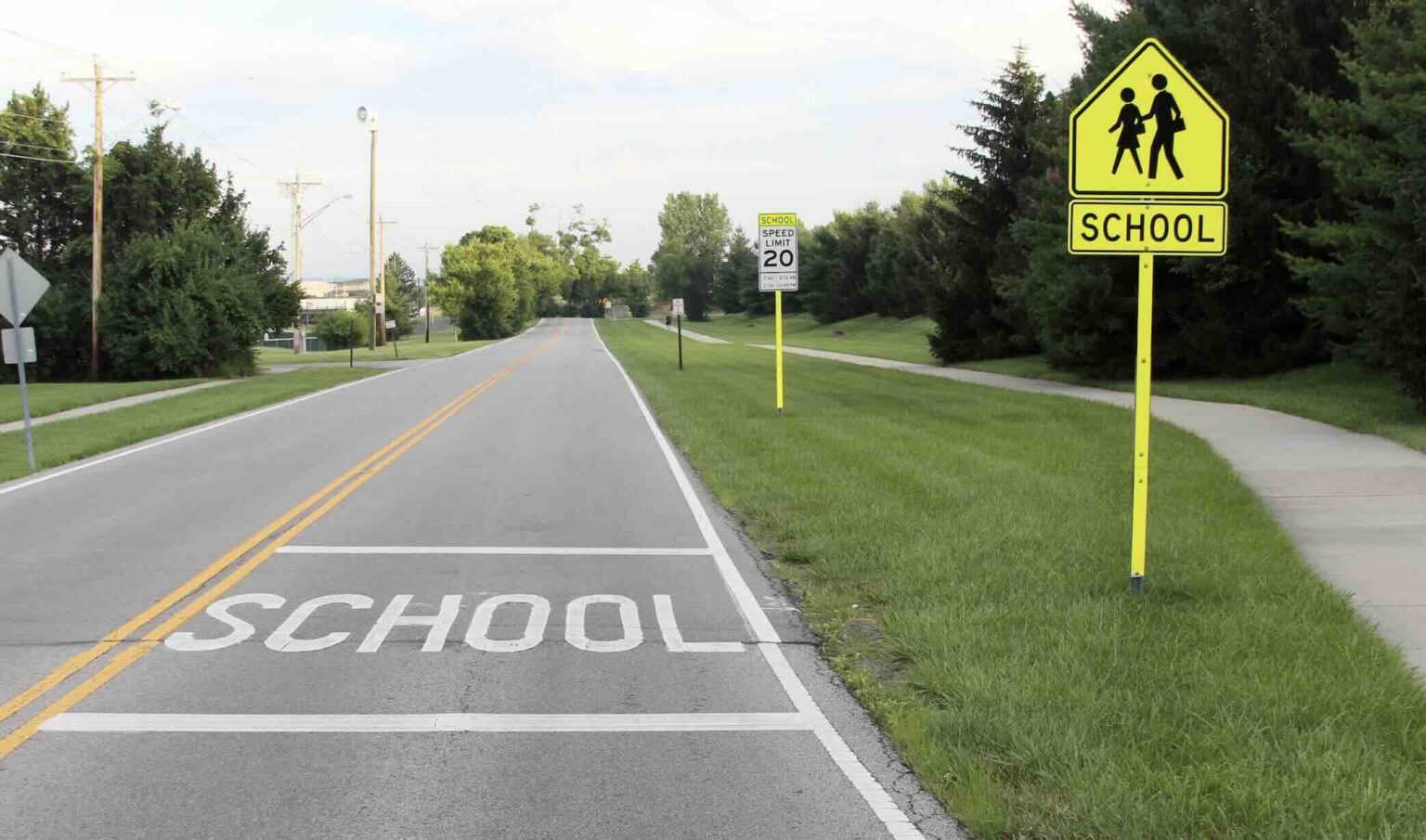
Slowing down 10 or 15 miles per hour allows a driver to stop more quickly and reduce the force of impact if a crash occurs. That’s why many school zones use flashing lights and clearly marked signs to let a driver know children are present and you need to slow down.
How Many Kids Get Hit in School Zones?
Fortunately, crashes inside active school zones are relatively rare compared to other roadways. However, the risk still exists.
According to the National Highway Traffic Safety Administration (NHTSA), hundreds of school-age children are killed each year in traffic crashes while heading to and from school, and thousands more suffer injuries.
That’s exactly why school zones encourage you to slow down and pay attention to your surroundings. While safety measures won’t prevent crashes entirely, they can significantly lower the likelihood that a mistake will turn into a tragedy.
Are School Zones Effective?
Research has shown that a lowered speed limit reduces both the likelihood of a crash and the severity of injuries when one does occur. And according to a national analysis by TRIP, Texas ranks 22nd in the nation for school zone safety.
Our school zones work because they combine several safety measures instead of relying on just one. Reduced speed limits, flashing lights, highly visible pavement markings, school crossing signs, crossing guards, and designated crosswalks are all signals that drivers need to be extra cautious.
However, a school zone is only as effective as the drivers passing through it. If they’re negligent and worry more about who’s texting them or speeding to get to work on time, the protections built into these areas become moot.
Texas School Zone Laws
School Zone Speed Limits
Unlike standard speed limits, school zone speed limits are typically only enforced during specific times of day, such as morning arrival and afternoon dismissal. Those hours are usually posted on nearby signs or activated by flashing yellow lights.
It’s important to pay attention to when a school zone is active and the adjusted speed limit. Even if you don’t see any children around, the rules still apply.
School Buses
When a school bus stops and extends its stop arm with flashing red lights activated, drivers are generally required to stop until the bus resumes motion or the signals are turned off.
En Texas, drivers traveling in both directions must stop for a stopped school bus unless the roadway is divided by a physical median or barrier that separates opposing traffic.
Passing, Crosswalks, and the Right of Way
During school arrival and dismissal times, you’ll likely see children crossing at marked crosswalks, crossing guards directing traffic, parents dropping off students, and buses stopping frequently.
If a crossing guard instructs you to stop, you need to follow their directions, even if you have a green light. Likewise, drivers must yield to pedestrians who are lawfully using a crosswalk.
Cell Phone Use in School Zones
Under Texas law, drivers are prohibited from using their cell phones while driving through an active school zone. That includes activities like texting, emailing, scrolling social media, or otherwise using your phone by hand.
Hands-free devices may be allowed to a certain extent, but the safest choice is to put your phone away entirely until you’ve left the school zone.
Back-to-School Driving Safety Tips
Desacelerar
Special speed limits in school zones exist for a reason. Children can step into the street without warning, and even a few extra miles per hour can significantly increase how long it takes you to come to a complete stop. Leaving a few minutes earlier is always safer than trying to make up time behind the wheel.
Put Your Phone Away
A text message can wait. Looking down for just a few seconds may be all it takes to miss a child entering a crosswalk or a school bus activating its stop arm. Eliminate distractions before you start driving, especially during school hours.
Watch for Crossing Guards and Crosswalks
Crossing guards are there to safely guide students across busy streets. Always follow their instructions (even if you have the right of way) and be prepared to stop whenever you approach a marked crosswalk.
Never Pass a Stopped School Bus
When a school bus activates its flashing red lights and extends its stop arm, assume children may be crossing the street. Never try to drive around the bus unless you’re legally permitted to do so on a divided roadway.
Expect the Unexpected
Children don’t always look both ways before crossing the street, and they may dart between parked cars or chase after a friend without noticing traffic. Driving defensively means anticipating these unpredictable moments instead of reacting to them after it’s too late.
Give Yourself Extra Time During the School Year
It’s no secret that traffic can get pretty crazy during pick-up and drop-off times. Be aware of that ahead of time and plan to leave a little early to avoid the temptation to speed through school zones or rush around slower traffic.
Remember That Someone’s Child Is Crossing the Street
It’s easy to see school zones as another delay in your commute. But every student walking across the street is someone’s son, daughter, grandchild, sibling, or friend. Taking a few extra seconds to slow down is a small inconvenience that can make an enormous difference in someone’s life.
Contact a Texas Car Accident Lawyer
Most students will never think twice about the safety measures put into place to protect them. They shouldn’t have to. It shouldn’t be a child’s responsibility to worry about whether the drivers around them are paying attention. They’re busy being kids.
Our responsibility as adults is to keep them safe, especially knowing they may not recognize the danger.
Every time you ease off the gas, stop for a school bus, or wait for a child to cross the street, you’re making it a little safer for everyone trying to get to school.
Unfortunately, not every driver does. And when someone ignores school zone laws and a child is seriously injured, the consequences can be catastrophic.
If you or someone you love has been hurt because of a negligent driver, don’t try to figure it out on your own. An experienced car accident attorney can answer your questions, explain your legal options, and fight for the full value you deserve.
Learn more about our Texas auto wreck attorney services hoy.
Frequently Asked Questions about Texas School Zones
When are school zones active in Texas?
School zone times can vary by district, but they are typically active during designated morning and afternoon hours. Many are marked with flashing yellow lights or posted signs showing the times when reduced speed limits apply.
What is the speed limit in a Texas school zone?
There isn’t one statewide school zone speed limit. The speed limit is set by the local government, but many school zones range from 15 to 25 mph.
Do you have to stop for a school bus in Texas?
Yes. Drivers traveling in both directions must stop when a school bus displays flashing red lights and extends its stop arm unless the opposing lanes are separated by a physical median. Remember, it is against the law to pass a school bus when its stop signs are out.
Can you pass another vehicle in a school zone?
Sometimes. It isn’t automatically illegal to pass another vehicle in a school zone unless there are posted signs that prohibit it. Always follow posted signs, and remember that the vehicle may be stopped for a reason (like a child attempting to cross the street).
What happens if you speed in a school zone?
Speeding in a school zone is an expensive and dangerous choice. Texas law doubles fines for speeding in an active school zone. Not to mention, if speeding causes a crash, you may also face civil liability for any injuries.