Autor: Shelby Benavidez
Abogado colaborador: Sean Szlachtowski, abogado
Tabla de contenido
TL;DR: What to Know After a Delivery Truck Accident
- A delivery truck accident can be more complicated than a crash between two regular drivers because more than one person or company may be responsible.
- You may have a claim against the delivery driver, the company that employs them, another delivery company, or another responsible party.
- Liability if delivery driver gets into accident depends on facts like who employed the driver, what they were doing at the time, and what caused the crash.
- There’s no reliable “average” truck accident settlement. What you’ll recover will depend on your injuries, medical care, lost income, insurance policy limits, and how the crash has affected your life.
- A delivery truck accident lawyer can investigate who’s responsible, preserve evidence, deal with the insurance companies, and help you understand what your claim may be worth.
Delivery trucks have become one of man’s best friends. Online shopping, next day delivery, and dinner at your doorstep have changed the way our society functions on a day to day basis.
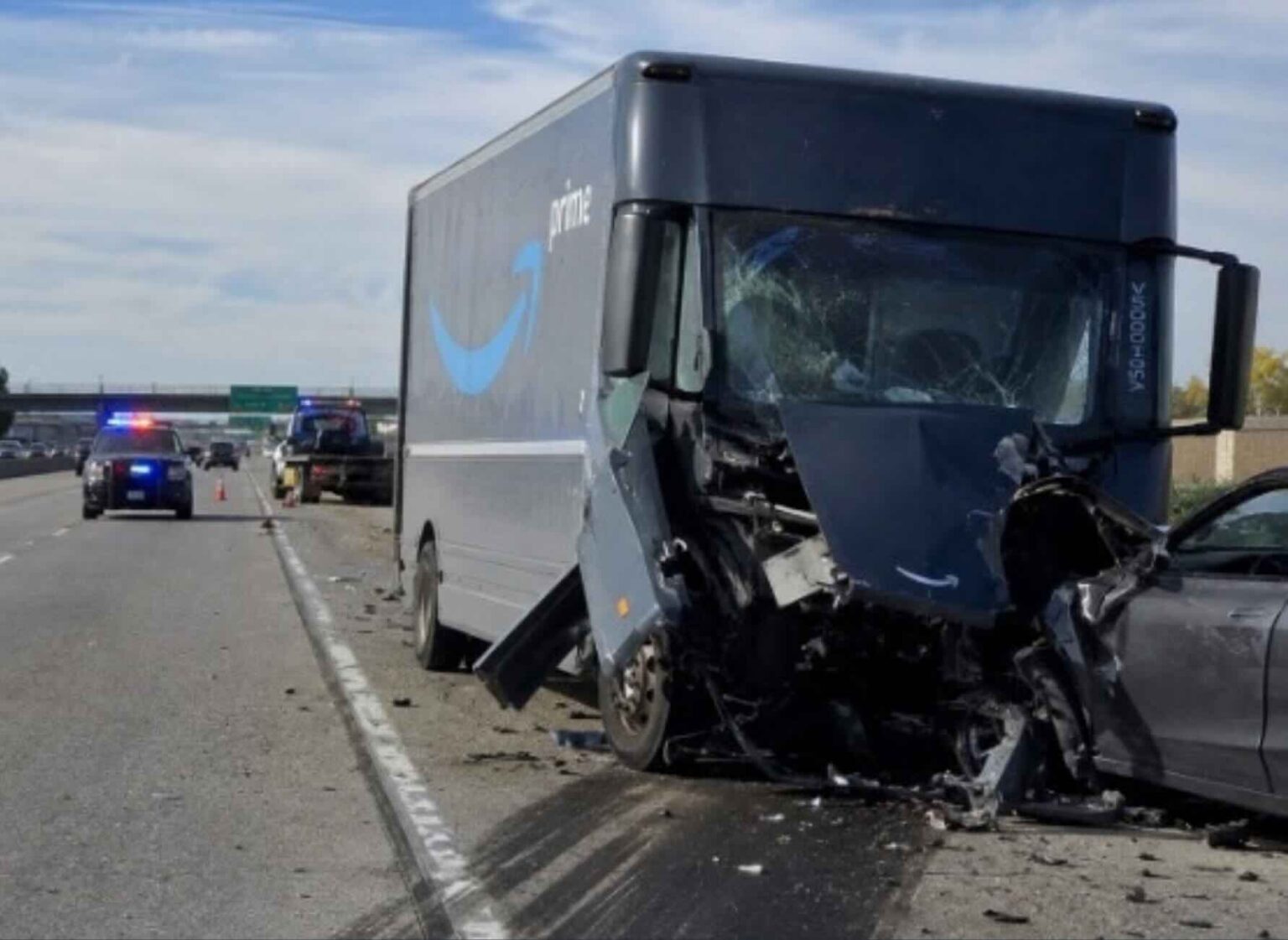
Every day you see Amazon vans moving through neighborhoods. UPS and FedEx trucks are stopping along busy streets. Grocery delivery drivers pulling in and out of parking lots. Most of the time, we’re grateful for these unsung heroes. Until one hits you.
Now, you’re injured and left to question who’s responsible for paying for your injuries. That’s what makes delivery truck accidents different from many other crashes. You may have gotten the name of the driver who caused the wreck, but now you have to hunt down who the driver worked for and who may be legally responsible for what happened.
Let’s look at how these cases work and when it may be time to call a delivery truck accident lawyer.
Suing a Trucking Company After a Delivery Accident
Can You Sue a Truck Driver for Hitting You?
If a delivery driver caused your crash because they were negligent, you may be able to bring a claim against them. And negligence is a broad term. When we call something a car “accident,” it can sound like it just happened and no one could have prevented it. But crashes rarely happen for no reason. Usually, someone’s actions contributed to what happened.
The driver may have been speeding, following another car too closely, looking at their GPS, making an unsafe turn, or backing up without checking what’s behind them. They could be tired after a long day of deliveries or distracted trying to find their next stop. Any of these behaviors could contribute to a crash and may be considered negligence.
But the driver isn’t always the one who caused the problem. Delivery drivers often use vehicles owned or maintained by the companies they work for. That doesn’t mean no one is responsible. It may mean you need to look beyond the person behind the wheel to figure out what caused the crash and who should be held accountable.
Liability if Delivery Driver Gets Into Accident
So, who is liable if a delivery driver gets into an accident? It depends on what caused the crash and how the delivery operation is set up.
Unlike a typical car accident, there may be several people and companies involved with a delivery vehicle. If the driver was negligent, their auto insurance may come into play, and the company they were working for may also have some responsibility. If the driver did nothing wrong but faulty brakes, a bad tire, or another problem with the vehicle caused the crash, liability may fall to the company that owned or maintained it.
There could even be more than one company involved. Let’s use Amazon as an example. Amazon deliveries can be handled through Delivery Service Partners, which are separate businesses that hire and manage drivers, as well as Amazon Flex drivers who use their own vehicles. That means seeing an Amazon package (or even an Amazon-branded van) doesn’t necessarily tell you who employed the driver, who owned the vehicle, what insurance applies, or who may ultimately be responsible for the crash.
And this isn’t unique to Amazon. Other delivery truck accidents can be just as complicated. The driver may have been careless, there may have been a problem with the vehicle, or the company responsible for maintaining it missed something. Who you have a claim against really comes down to what went wrong and who was responsible for it.
In these situations, you’re likely dealing with a large delivery company, its insurance carrier, and lawyers whose job is to protect their interests. That’s why it’s important to have your own attorney. An Amazon delivery accident lawyer or delivery truck accident lawyer can investigate how the crash happened, untangle the relationships between the companies involved, identify available insurance coverage, and determine where responsibility may fall.
Delivery Truck Accident Claims
How Long Does a Truck Accident Lawsuit Take?
This is a question we get asked time and time again. Unfortunately, there isn’t a black-and-white answer. Some claims settle in less than a year without a lawsuit ever being filed. Others can take longer, especially when the injuries are serious, several parties are involved, or there is disagreement about who caused the crash.
After a delivery truck accident, one of the most important things you can do is take care of yourself. Go to your appointments, follow your doctor’s treatment plan, and be honest about how you’re feeling. Your attorney can handle gathering medical records, bills, lost wage information, and other documents needed to show how the crash has affected you.
We understand why our clients want their cases over with. You’ve already dealt with the crash, the pain, the appointments, and everything else that came with it. Of course you want to put it behind you. But our job isn’t to get your case closed in record time. Our job is to work toward the best possible resolution for you.
Settling too early could mean resolving your claim before you know how much treatment you’ll need, whether you’ll fully recover, or how your injuries could affect you down the road. Once a settlement is final, you generally can’t go back and ask for more because your injuries ended up being worse than you thought. Our goal is to make sure we understand the full impact of your injuries before resolving your claim so we aren’t leaving money on the table.
What Is the Average Settlement for a Semi-Truck Accident?
Just like people want to know how long their case will take, they also want to know what it might be worth. When you’re dealing with medical bills, missing work, and trying to recover from an injury, you want to know what all of this could mean for you financially. The problem is, there really isn’t a meaningful “average” settlement for a truck accident. Every crash affects people differently.
Maybe you went to the emergency room, missed a few weeks of work, and made a full recovery. Or maybe you can’t return to the same job, do the things you used to enjoy, or live your day-to-day life the way you did before the crash. All of that matters.
Your claim should account for what the crash has actually cost you. That can include your medical care, lost income, future treatment, and the ways your injuries have affected your life. It may also need to account for losses you’ll continue to experience years from now.
Hiring a Delivery Truck Accident Lawyer
After an accident with a delivery truck driver, it’s worth considering a call to a delivery truck accident lawyer. Consultations are free, and there’s no pressure or obligation to move forward.
Delivery truck accidents can involve the driver’s insurance company, the delivery company’s insurance carrier, and even multiple adjusters representing different businesses. While you’re focused on recovering, they’re already handling the claim.
An attorney can step in to investigate what happened, identify who may be responsible, communicate with the insurance companies, and help you understand what your case may be worth.
This can be especially important in Amazon-related crashes. An Amazon delivery accident lawyer can look at the driver, any Delivery Service Partner, the vehicle owner, and the insurance companies involved rather than assuming the Amazon name tells the whole story.
The same goes for local crashes. Austin delivery vehicle accident lawyers or an Austin Amazon delivery accident attorney can help untangle who was involved, what insurance applies, and what options you have.
When you’re dealing with large companies and insurers that handle claims like these every day, it helps to have someone in your corner who does, too.
Protecting Your Claim After a Delivery Truck Accident
When a regular car hits you, you usually exchange information with one driver and one insurance company. A delivery truck can be different. The van may have one company’s logo on the side while the driver works for another business. The vehicle may belong to someone else. Another company may handle part of the delivery operation.
That’s why one of the most important questions after a delivery accident isn’t just “Who hit me?” It’s “Who was responsible for putting that vehicle on the road?” Finding that answer can help you understand what happened, what insurance coverage may be available, and where responsibility for your injuries belongs.
If you were hurt by a delivery van, box truck, Amazon vehicle, or another commercial vehicle, learn more about our accident lawyers and how we can help protect you from what comes next.
Frequently Asked Questions About Delivery Truck Accidents
What Can You Sue a Trucking Company For?
Depending on what happened, a trucking or delivery company may be responsible for losses caused by a crash. These can include medical expenses, lost income, loss of future earning ability, pain, impairment, property damage, and other losses. Who can actually be sued will depend on the relationship between the driver and the companies involved.
Can I Afford a Truck Accident Lawyer?
Many personal injury attorneys handle truck accident claims on a contingency fee. This means the attorney’s fee is taken out of your final settlement or verdict rather than requiring the injured person to pay an attorney’s fee upfront.
At Daniel Stark, our No Win, No Fee policy means you don’t owe us anything unless we win your case.
How Long Do I Have to File a Delivery Truck Accident Claim in Texas?
Texas generally gives people two years to file a personal injury lawsuit, but there are exceptions that can shorten or change the deadline. However, it’s important not to wait until last minute. Evidence related to delivery truck accidents, including video, vehicle information, records, and witness testimony, may become harder to obtain as time passes.
Who Pays if an Amazon Delivery Driver Hits My Car?
It depends on who was driving and the relationship between that driver and the businesses involved. Amazon uses different delivery models. Some packages are delivered by drivers working for Delivery Service Partners, while Amazon Flex drivers are independent contractors who use their own vehicles.
An Amazon delivery accident lawyer can investigate who the driver worked for, who owned the vehicle, and what insurance is available.
If the crash happened locally, an Austin Amazon delivery accident attorney can investigate the specific circumstances instead of assuming Amazon itself or the individual driver is automatically responsible.
What Happens if the Delivery Driver Was Using Their Own Car?
Using a personal vehicle doesn’t automatically make the crash a normal car accident. The driver’s personal auto insurance, a delivery company’s coverage, or other insurance could potentially come into play depending on the driver’s work arrangement and what they were doing when the crash happened.
This is another reason liability if a delivery driver gets into an accident needs to be investigated case by case. Austin delivery vehicle accident lawyers need to understand what type of vehicle hit you and how that particular delivery operation works before determining how to approach the claim.