Author: Shelby Benavidez
Contributing Attorney: Spencer Smith, attorney
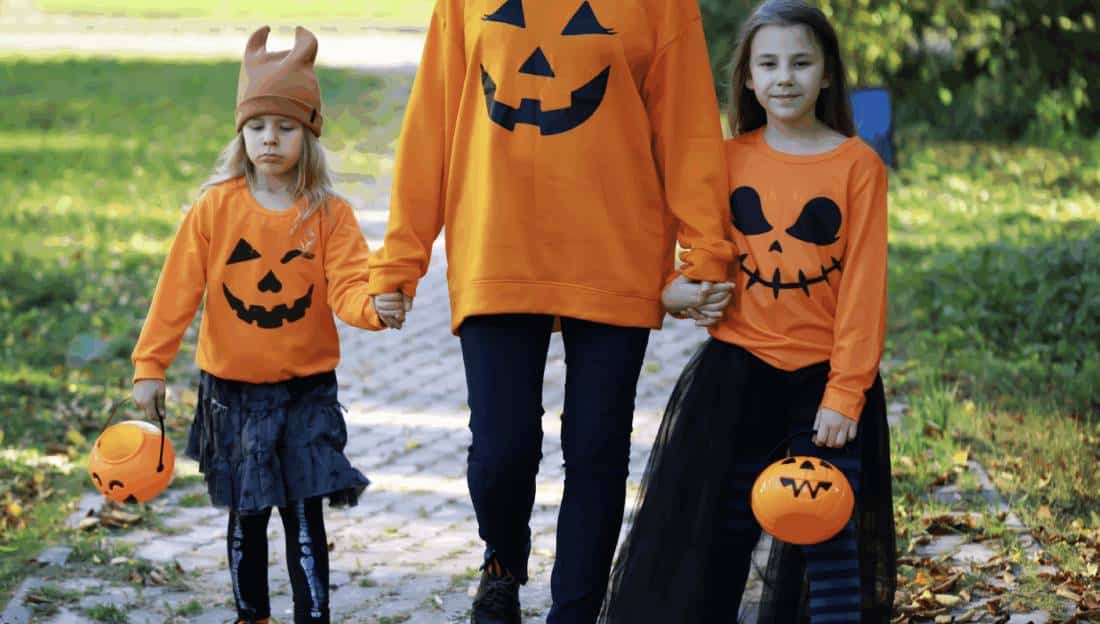
Halloween is one of the most exciting nights of the year for children. Between costumes, candy, and glowing jack-o’-lanterns, there’s a lot to enjoy! But it’s also a night when pedestrian injuries spike. According to safety experts, children are twice as likely to be hit by a car on Halloween than on any other day of the year.
That statistic alone is enough to make any parent pause. But here’s the good news: with some planning and a few smart precautions, Halloween can be both fun and safe. Whether you’re taking toddlers around the block or letting older kids explore the neighborhood, these pedestrian safety tips will help everyone have a night full of treats instead of trips to the emergency room.
Halloween Costume Safety
Wear Reflective or Bright Costumes
As adorable as vampire capes and black cat outfits may be, they can make children almost invisible to drivers once the sun goes down. Visibility is one of the most important parts of pedestrian safety. Encourage your kids to choose bright or light-colored costumes, like white, neon, or pastel tones, that are easier to spot in low light.
If your child has their heart set on a dark costume, try to add modifications that will make your child more visible. Add reflective tape or glow-in-the-dark stickers to the front, back, and sides of their costume. Reflective wristbands, trick-or-treat bags, and even light-up shoes can also help drivers see your child from a distance.
Another easy option to improve visibility is to give kids glow sticks. Deck them out head to toe in glow stick necklaces, bracelets, and anklets. They’re fun for children, they add to the Halloween vibe, and they serve a practical purpose of helping your children be seen by drivers. Visibility saves lives. The more reflective your child’s costume is, the better.
Make Sure Costumes Are Well Fitting
Halloween costumes for children almost never fit perfectly – they’re often too long or too short, too baggy or a little too tight. While it’s okay to leave a little room to grow, it’s important to make sure the costume doesn’t affect your child’s mobility. If a costume drags the ground or is too bulky, it can lead to tripping and falling, especially when kids are walking on unfamiliar sidewalks or stairs.
Shoes are another key part of safety. Trick-or-treating requires a lot of walking! Comfortable, well-fitting shoes with good traction help prevent slips and stumbles. Even if they are a staple to your child’s costume, try to avoid heels, slick soles, or costume shoes that pinch or slide.
Many costumes, like a strong knight or an active Power Ranger, require the right accessories to make the outfit complete. However, make sure all accessories are safe to walk around with. If your child is carrying a sword, wand, or broom, make sure it’s lightweight, flexible, and short enough not to drag or poke. Avoid anything sharp or hard that could cause injury if your child trips.
Before heading out for an epic night of trick-or-treating, have your child do a few laps around the house. Have them walk, climb steps, and move around in their full costume – props and all. Adjust as needed so they can walk comfortably and safely from house to house.
Use Face Paint Instead of Masks
Most great costumes are complete with a mask, but, unfortunately, most masks made for children’s costumes don’t fit correctly and limit visibility. Seeing potential hazards is already hard enough in the dark; adding a mask in the mix could lead to disaster. Your child may not see cracks in the sidewalk or approaching cars.
Instead, opt for non-toxic face paint or makeup. It’s a safer, more comfortable alternative that allows your child to see clearly. Make sure the paint is labeled as safe for skin and do a small patch test first to avoid allergic reactions.
If your child insists on wearing a mask, make sure it fits snugly and the eye holes are large enough for full peripheral vision. You can also encourage them to lift or remove it while crossing streets or walking in crowded areas.
Trick-or-Treating Road Safety
Plan Your Route
Plan a safe and familiar route for the best trick-or-treating experience. Stick to well-lit neighborhoods with sidewalks and houses that are close together. Avoid dark or poorly lit areas where visibility might be limited.
For younger children, choose a shorter route that you can easily supervise. If older kids are trick-or-treating with friends, make sure they know the route in advance and agree on a curfew. Share your phone number with them and remind them to check in periodically.
Planning ahead also means fewer surprises and fewer chances of kids darting across unfamiliar streets. You can even do a quick drive-by of your planned route earlier in the day to identify potential hazards like construction zones, uneven sidewalks, or areas without streetlights.
Use Sidewalks and Crosswalks
It might seem obvious, but excitement can make kids forget basic rules. Always remind them to stay on sidewalks whenever possible. If there’s no sidewalk, walk facing traffic and keep as far to the left as you can.
Cross only at crosswalks or corners, never between parked cars or across mid-block. Drivers are more likely to see pedestrians in designated crossings. If a crosswalk isn’t available, find a well-lit area with a clear view of traffic in both directions before crossing.
Teach kids to look left, right, and left again before stepping off the curb and to continue looking while crossing. Walking (not running) across the street gives drivers more time to react. Even though it’s tempting to run from one house to the next, taking a few extra seconds to cross safely can be the difference between a fun night out and a tragedy.
Make Eye Contact with Drivers
Children often assume that if they can see a car, the driver can see them – but that’s not always the case. Encourage your kids to make eye contact with drivers before crossing in front of a vehicle. This simple action confirms that the driver is paying attention and intends to stop. When in doubt, wait until the vehicle has fully stopped and you’ve made visual contact with the driver before crossing.
It’s important for children to walk in front of vehicles and never behind them. You can’t make eye contact with a driver from behind, and if the driver suddenly reverses, they may not see your child standing there.
Neighborhood Awareness While Trick-or-Treating
Don’t Walk Through People’s Yards
Walking up and down each driveway may have you tempted to take a shortcut through the grass, but we highly encourage you to stick to the sidewalk! People may have inflatables anchored in their yard, gravestone decorations, extension cords, sprinklers, or rogue tree roots creating nearly invisible hazards. You or your child could trip and fall and face severe injuries, including scrapes, bruises, broken bones, or even impalement.
Not only is it safer, but it’s also respectful to homeowners. Remind your child to use the designated paths to the front door and stay clear of any unlit side or backyards.
Watch for Animals
Even the friendliest family pets can act unpredictably on Halloween. The constant noise, costumes, and doorbell rings can make animals anxious.
Teach your children to avoid approaching any animals, even if they seem friendly. If a homeowner opens the door with a dog nearby, remind your kids to stand still and avoid sudden movements until the animal is under control.
For families bringing their own pets along for the fun, make sure animals are leashed, visible, and comfortable in crowds. A startled dog can pull away or trip someone if not properly managed.
Stay Alert and Unplugged
With phones, cameras, and candy excitement, distractions are everywhere. But Halloween night requires extra awareness. Teach your children (and remind yourself) to put phones away while walking, especially when crossing streets.
Encourage older kids to keep one ear free if they’re listening to music or chatting on a headset. Hearing traffic, sirens, or approaching cars is crucial. Adults should also stay alert. Keep an eye out for vehicles that might not see smaller children, especially in driveways or at intersections.
If you’re supervising a group, consider assigning one adult to lead and another to follow behind. This way, no child wanders off unnoticed, and everyone stays visible.
Key Takeaways: Keep Your Family Safe This Halloween
Halloween is meant to be magical, not stressful. By preparing ahead of time and following a few simple safety rules, you can help ensure your children have a fun, safe, and memorable evening.
Bright costumes, mindful walking, and a little extra awareness go a long way toward preventing accidents. The goal isn’t to take the fun out of Halloween – it’s to keep everyone safe enough to enjoy it fully.
So, grab your flashlights, lace up those sneakers, and head out for a night of spooky, candy-filled adventure knowing your family is prepared and protected.