
Author: Shelby Benavidez
Contributing Professional: Ryan Tibbitts, Content Director
Podcasts have quickly become a go-to way for businesses to share what they know, connect with their audience, and strengthen their brand. Unlike traditional ads, which can sometimes feel pushy or overly salesy, podcasts let you talk in a natural, conversational way. That makes it easier to form real connections with the people listening.
As Ryan Tibbitts, Content Director at Daniel Stark Injury Lawyers, explains, “Podcasts are just a great format to flex your expertise. Audiences are drawn to people who really know their craft, even if it’s something they wouldn’t otherwise be interested in.”
The versatility of podcasts is part of their appeal. They can position your company as an industry leader, foster thought leadership, or provide content for social media clips and newsletters. They also allow for authentic storytelling, letting listeners experience your company’s mission, values, and personality in a way that few other formats can achieve.
A podcast requires work, sure, but it’s not as intimidating as it seems. With the right strategy, planning, and equipment, any business – whether a startup or a well-established company – can launch a podcast that captures attention, delivers value, and drives results. This guide provides a step-by-step roadmap to get your business podcast off the ground.
Planning Your Podcast
Before ever picking up a mic to record your first episode, it’s important to define your podcast’s purpose and structure. Start with the theme: What will your show focus on, and what value will it provide to listeners?
“The more specific you can get, the better,” Tibbitts explains. “If you Frankenstein a podcast and your audience never knows what you’re talking about from episode to episode, it’s much harder to succeed.”
Next, choose your host. Strong conversational skills are more important than title or authority. Your CEO doesn’t need to host if someone else on your team is more engaging.
“People would rather listen to someone who has very little authority but is good at communicating than someone who can fire everybody but isn’t engaging,” Tibbitts says.
Your host should be confident and able to ask good follow-up questions. They need to keep the conversation moving without dominating the discussion.
Podcast Equipment You’ll Need to Get Started
You really don’t need a fancy studio to get started with a podcast. Even just a few key pieces of gear and a simple setup are enough to make your episodes sound good and keep people listening. Here’s the gear we focus on first, and why it matters.
1. Microphone
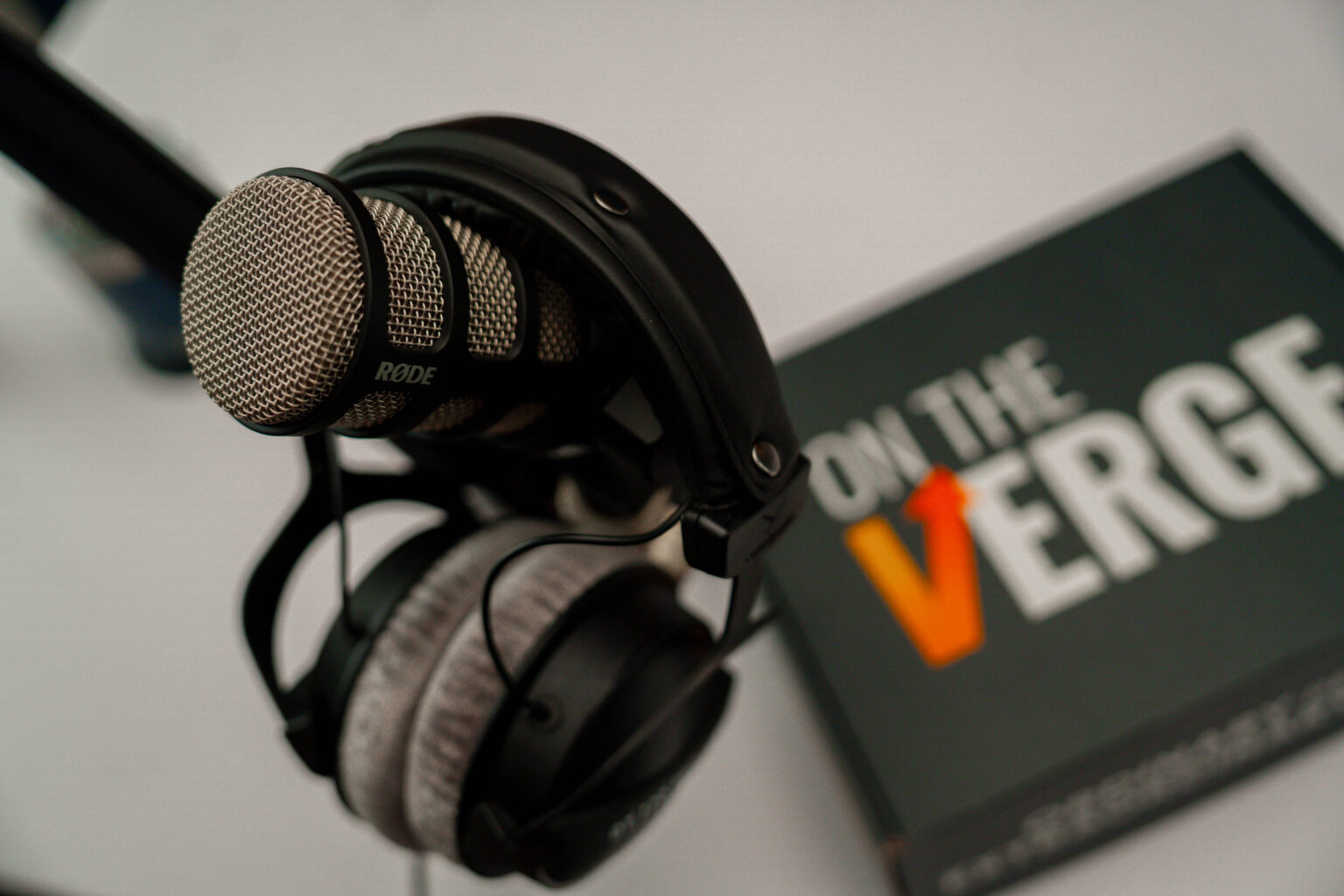
Your microphone is the single most important piece of podcast equipment. Whether your podcast is audio-only or will also include video, listeners will forgive grainy or poorly lit visuals, but they will not tolerate poor audio. If you can only invest in one piece of gear, make it a quality mic. For simplicity, you can start with a microphone that attaches to your phone and use your phone to record your episodes.
2. Headphones
Headphones allow you to monitor audio as you go, catching issues right off the bat. Unlike large productions with dedicated sound engineers, most small podcasts don’t have someone adjusting levels constantly. Wearing headphones helps you notice if someone is too close or too far from the mic, laughing too loudly, breathing heavily, or creating other distracting noises.
Tibbitts warns, “All of those things can ruin a take, and they can be easily prevented by just wearing headphones and actively listening for distractions.”
3. Editing Software
Editing software is necessary to polish your episodes, even if it’s just making simple cuts or adding intro and outro music. You can use advanced programs like Premiere Pro or DaVinci Resolve if you want to manage multiple camera angles and fine-tune audio, but for most beginners, basic editing software will do the trick. You may not even have to pay for basic software; there are several free solutions out there.
4. Podcast Hosting Platform
A hosting platform makes it easy to distribute your episodes to Apple Podcasts, Spotify, and other major directories. Buzzsprout is a popular choice for beginners because it’s user-friendly, provides excellent support, and has a wealth of educational resources. When starting out, pick the simplest way to get your show published quickly.
5. Camera
Video recording is optional but highly recommended, especially if you want to repurpose content for social media. Your camera can be as simple as your smartphone. Video allows you to share clips across multiple platforms and reach a broader audience.
6. Recording Setup
Once you have the basics, create a setup that makes recording easy and repeatable. This might include dedicated lights, mic stands, or a quiet nook for soundproofing.
“Get a setup that’s as close to ‘set it and forget it’ as possible,” Tibbitts says. “The easier it is to record, the more likely you are to be consistent.”
7. Remote Recording Tools
Finally, online recording platforms like Zoom or SquadCast allow you to host guests remotely. This is especially helpful if your podcast features multiple guests, or if traveling to a studio is impractical. Remote tools make it easier to scale your guest list without limiting yourself to in-person recordings.
If you want to get very specific with gear, there are countless reviews and tutorials online. Tibbitts recommends starting with a realistic budget and working through this list systematically. Above all, prioritizeusability over top-of-the-line equipment; complicated setups are more likely to slow you down than help you.
“We’re all human, and if something is complicated and difficult to use, the odds of you sticking with your podcasting efforts drop substantially,” Tibbitts says.
Guests and Engagement
Bringing in guests can make your podcast more interesting. Even if your show is mostly about internal topics, having a colleague, mentor, or someone from your industry join once in a while keeps things from getting stale and gives listeners a new perspective.
“For season one, rely on your friends, colleagues, and co-workers,” Tibbitts says. “You’d rather learn the lessons with people you know than risk looking unprepared with a high-profile guest.”
The goal for any great podcast should be to create authentic conversation, even if it isn’t perfect.
“I love podcasts because they’re such an easy way to get professionals to share real, thoughtful advice,” Tibbitts says. “Even if you record a 40-minute episode and only a few minutes are really solid, make the most of those clips. Pull them out, share them on social media, and include a call to action that guides people to the full episode.”
Promoting Your Podcast
How you distribute your podcast should be determined by your audience and which platforms they use the most. Publish full episodes to major podcast platforms and share short-form clips on LinkedIn, TikTok, Instagram – wherever your audience spends most of their time.
“If you don’t know anything else about podcasting, get to know your audience,” Tibbitts says. “Figure out where they spend time online and let that guide where you share clips and highlights. You could have the best podcast in the world, but it doesn’t matter if it never actually reaches the people you want to hear it.”
Measuring success depends on your goals. If brand deals are your target, track watch time, views, and engagement. If brand authority is the objective, monitor shares, comments, and reach. Purpose-driven podcasts, such as advocacy initiatives or thought leadership, may also track offline metrics, like client inquiries or fundraising outcomes. Focus on leading indicators rather than lagging ones to help improve your podcast strategy over time.
Lessons from Experience
Tibbitts’ experience launching two podcasts for Daniel Stark Injury Lawyers highlights key lessons for first-time podcasters. Don’t wait for perfection before launching – starting sooner allows for learning and iteration. Align production and on-camera talent to help create smooth recordings and clarify the purpose of every element, from intros to outros.
“People are more forgiving than you think,” Tibbitts says. “Interesting insights and relatable personalities matter more than perfect audio or lighting. Even a small piece of the podcasting pie is better than none.”
He also stresses that the podcasting process itself is a learning experience: technical challenges and minor mistakes will happen, but planning, preparation, and flexibility can turn these challenges into opportunities.
Taking the First Step
If you’re thinking about starting a podcast for your business, take a moment to consider what’s holding you back. If you don’t have a team ready to commit to making it successful, it might not be worth the time.Keeping up with a podcast is a lot of work, so make sure you have the buy-in from the right people before diving in. But if you have the resources and the people in place, the best thing to do is just start. You can learn, adjust, and improve as you go – there’s no need to wait for perfection.