
Author: Shelby Benavidez
Contributing Attorney: Brad Russell, attorney
If you drive a newer vehicle, chances are you’re surrounded by technology. Your car can read your text messages out loud, connect to your phone with a single tap, give turn-by-turn directions, and even respond when you say, “Hey Siri” or “Hey Google.” All of this is marketed as hands-free, and by extension, safer. However, just because your hands are on the wheel doesn’t mean that your mind is fully on the road.
In-car technology is designed to make driving easier and more convenient, but it can also introduce new forms of distraction that many drivers underestimate. Hands-free does not always mean risk-free.
In this blog, we’ll break down what hands-free devices really are, how they impact driving safety, and what you should know before connecting to CarPlay.
Understanding Hands-Free Technology in Vehicles
What Is a Hands-Free Device?
A hands-free device is any technology that allows a driver to perform a task without physically holding or manipulating a phone or device. In vehicles, these systems are meant to reduce manual distraction by keeping your hands on the steering wheel and your eyes on the road.
Hands-free technology typically relies on voice commands, steering wheel controls, dashboard touchscreens, or automatic integrations between your phone and your vehicle. While hands-free devices may reduce one type of distraction, they don’t eliminate all distractions.
Examples of Hands-Free Devices in Your Vehicle
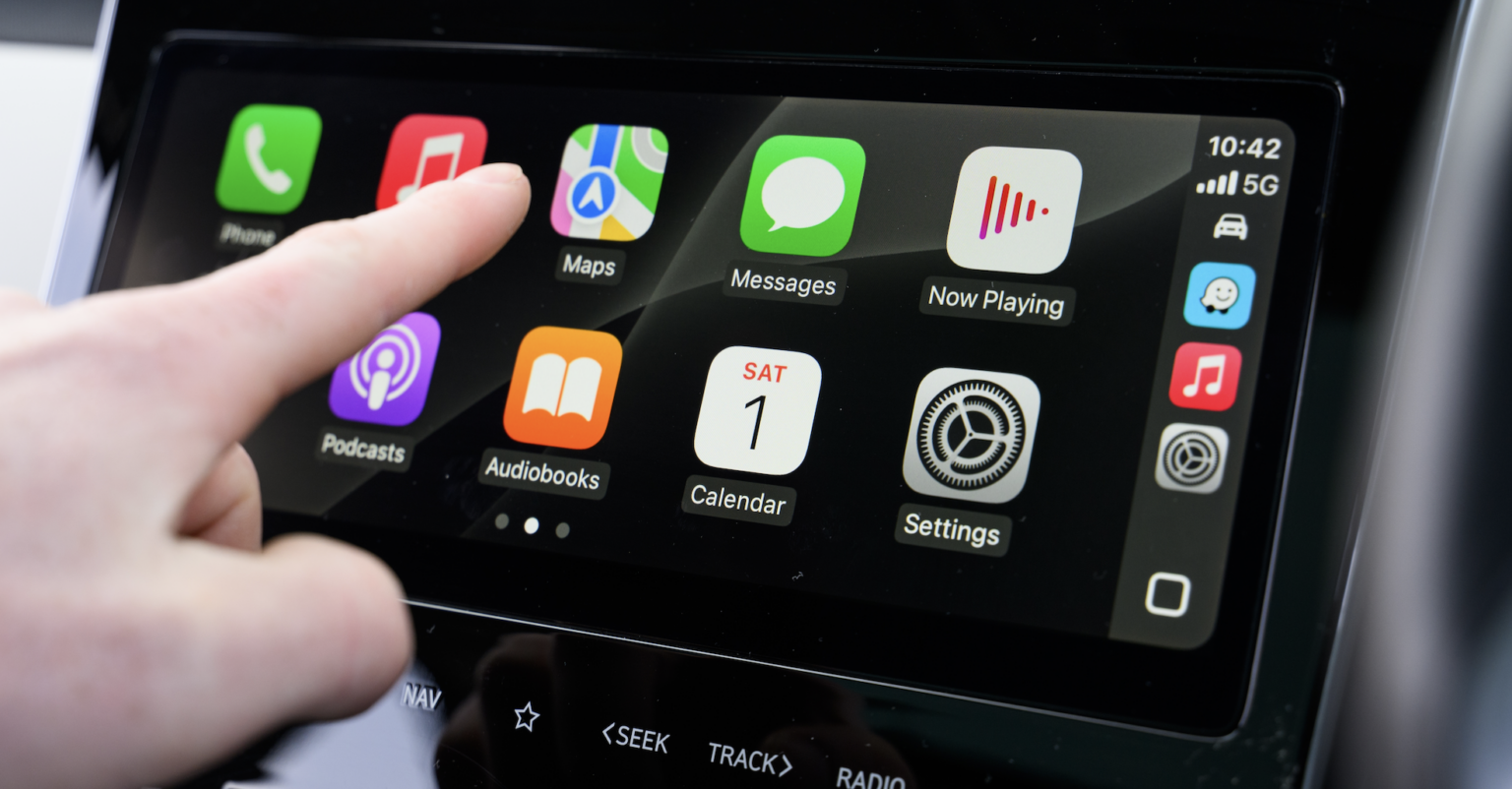
Most modern vehicles have some form of hands-free technology. This includes Bluetooth calling and voice-activated texting, navigation systems with spoken directions, Apple CarPlay and Android Auto, voice assistance like Siri and Alexa, and steering wheel controls that adjust volume, skip songs, and answer calls.
Is Using Hands-Free While Driving Safer?
There are three main types of distracted driving: manual (hands off the wheel), visual (eyes off the road), and cognitive (mind off driving). Research shows that hands-free technology can reduce manual and visual distractions because you don’t have to remove your hands from the wheel to respond to a text or glance down at a map to find your exit.
However, according to traffic safety research, drivers using hands-free phones experience similar levels of mental distraction as those using handheld devices. Even with your hands on the wheel, talking on the phone or arguing with Siri can reduce your situational awareness and slow your reaction time. You may not notice a pedestrian stepping off the sidewalk or someone making a sudden stop ahead of you. So, while hands-free devices may be safer than traditional texting and driving, the safest option is always to direct your full attention to the road.
How In-Car Technology Contributes to Driver Distraction
What is Cognitive Distraction?
Cognitive distraction occurs when a driver’s mind is focused on something other than driving. Talking on the phone (hands-free or not) requires mental processing. You’re listening, responding, forming thoughts, and engaging emotionally. All of that mental effort takes resources away from driving.
Drivers who are cognitively distracted may stare at the road without noticing hazards, have delayed brake or steering responses, and miss important visual cues. Because you appear alert and feel more confident with your eyes on the road, this type of distraction is especially dangerous.
Touchscreens, Alerts, and Overstimulation Contributing to Distracted Driving
Dashboards in newer vehicles are jaw-dropping. Some luxury vehicles have screens that are 50 inches or more! You can watch movies, stream videos, or play games – turning what used to be a simple radio into a full entertainment system. The original purpose of these features was to safely display essential vehicle information and assist with navigation, but now they can significantly increase the risk of cognitive distractions. And with many being touchscreens, you’re still influenced to take your hands off the wheel.
Without hands-free technology, your phone would be tucked in a bag, and you’d be oblivious to any notifications. However, a large, bright screen sending frequent notifications keeps your mind partially focused on something other than driving. Drivers often underestimate how much mental load these distractions add, which can make even experienced drivers vulnerable to mistakes.
Why Drivers Overestimate Their Multitasking Ability
Many drivers believe they can safely multitask behind the wheel, but decades of research show otherwise. Believe it or not, the human brain isn’t truly capable of multitasking. Instead, it quickly switches between tasks, and each switch creates a momentary lapse in attention. When traveling at 75 mph, even a four-second delay can mean traveling the length of a football field without fully processing what’s happening around you.
Hands-Free Laws and Accident Liability in Texas
What Does Texas Law Say About Hands-Free Driving?
Texas law acknowledges that hands-free devices are a safer alternative to handheld devices while driving. Therefore, it is generally legal for most adults to use hands-free technology. However, there are some exceptions.
For example, drivers under 18 are prohibited from using any wireless communication device while driving – even if it is hands-free. School crossing zones and local ordinances may also prohibit any cell phone use (hands-free included) during certain hours of the day.
Can You Still Be Found at Fault While Using Hands-Free Technology?
While hands-free use is legal in Texas, you can still be found at fault if you cause an accident because hands-free devices still contribute to distracted driving. Even if you were not the sole reason for the crash, using hands-free devices could make you partially at fault.
Evidence showing distraction, such as voice calls, infotainment use, or delayed reactions, may be used against you in a claim. Insurance companies and investigators may be able to pull your phone records to expose what you were doing at the time of the crash. Using hands-free technology doesn’t automatically protect you from liability if it can be proven that your attention was diverted away from the road.
Key Takeaways: Distractions with Modern Vehicle Technology
Technology in our vehicles isn’t going anywhere. In many ways, it has made driving safer, more efficient, and more accessible. However, the safest drivers aren’t the people with the most advanced technology; they’re the ones who know when not to use it.
By understanding the limits of hands-free devices and recognizing how distraction truly works, drivers can make better choices behind the wheel and make the roads safer for everyone.
FAQs About Hands-Free Driving and In-Car Technology
What does “hands-free” mean while driving?
Hands-free driving refers to using technology that allows you to communicate or control features without physically holding a phone or device. This often includes voice commands, steering wheel controls, or built-in vehicle systems.
Is hands-free phone use legal in Texas?
Yes. Texas law allows adult drivers to use hands-free phone features, such as voice calls or navigation. However, texting while driving is illegal statewide.
Can drivers under 18 use hands-free devices in Texas?
No. Drivers under 18 are not allowed to use wireless communication devices while driving, even if the device is hands-free.
Are voice-to-text features safer than typing while driving?
Voice-to-text is generally safer than typing because it reduces manual and visual distraction. However, it can still create cognitive distraction. Your safest bet is to wait to respond to a text until you reach your destination.
Do hands-free systems eliminate distracted driving?
No. While hands-free technology can reduce certain distractions, it does not remove mental distraction. Drivers can still lose focus during conversations or complex voice interactions.
Can local Texas cities have stricter distracted driving rules?
Yes. Some cities in Texas have local ordinances that further restrict phone use while driving, so it’s important to be aware of local laws.
What is the safest way to use in-car technology while driving?
The safest approach is to set navigation, music, and other features before driving and limit interactions while the vehicle is in motion.