Author: Shelby Benavidez
Contributing Attorney: Olivia Chapa, attorney
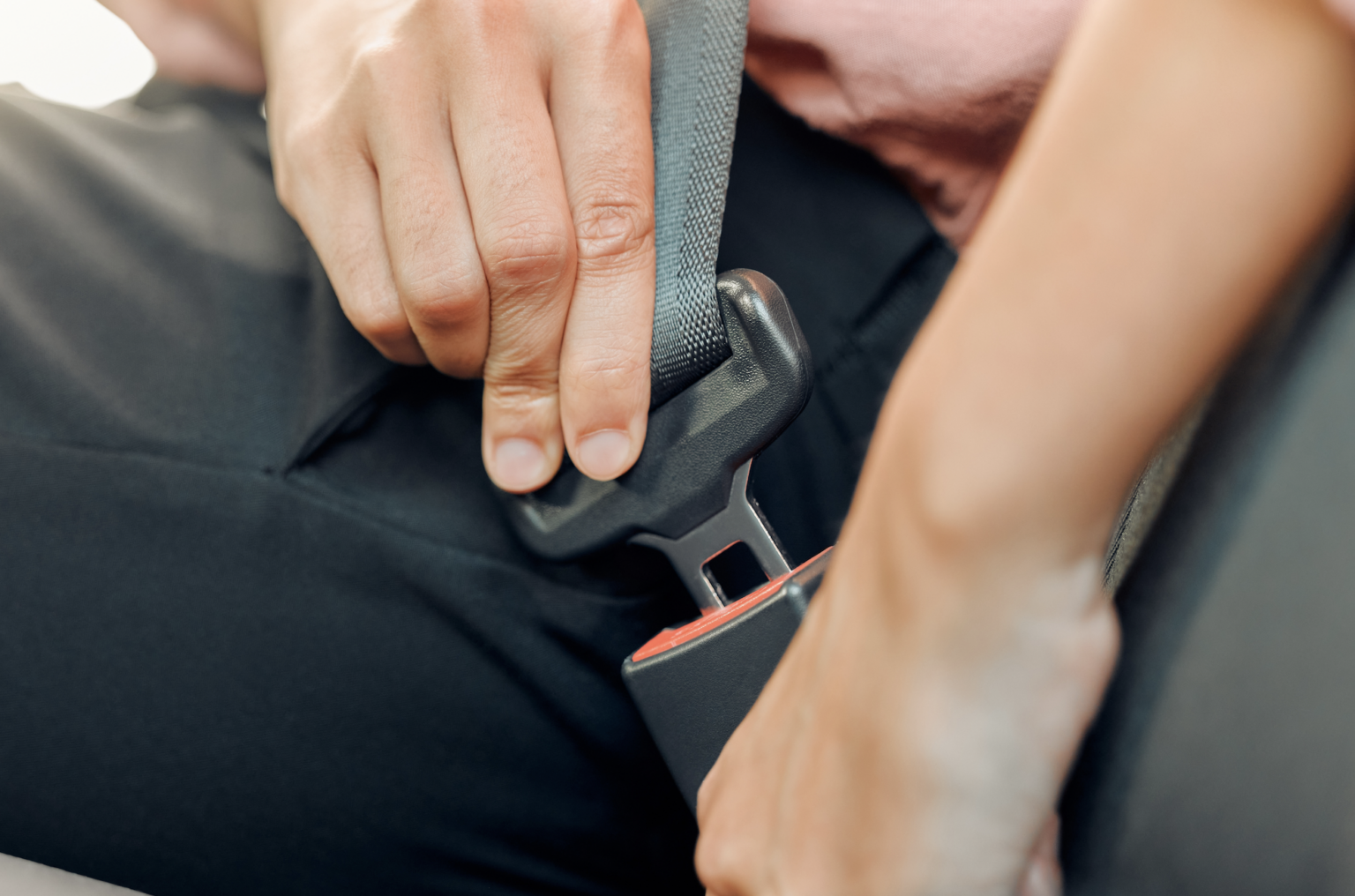
Most of us don’t think twice about fastening our seat belt. It’s routine. Muscle memory. A quick click before pulling out of the driveway. But that simple action is one of the most powerful safety decisions you can make every time you get in a vehicle.
Seat belts save lives – plain and simple. According to national traffic safety data, wearing a seat belt reduces the risk of fatal injury to front-seat passenger car occupants by 60% in a van, SUV, or pickup and about 45% in a sedan. Despite that, a significant number of people still choose not to buckle up. In fact, more than half of passengers who are fatally injured in crashes were not wearing a seat belt at the time of the accident.
Why does this still happen? Often, it comes down to myths, misunderstandings, or the belief that “it won’t happen to me.” In this article, we’ll break down common seat belt myths, explain how seat belts really work, cover special safety considerations, and walk through Texas seat belt laws so you can make informed choices every time you ride or drive.
Debunking Seat Belt Myths
Seat Belts Can Do More Harm Than Good
We hear this one all the time: “Well, seat belts cause injuries, too.”
Yes, seat belts can cause injuries during a crash. Bruising, abrasions, or even minor burns from the belt are possible, especially in high-impact collisions. But these injuries are far less severe than the alternative.
Without a seat belt, your body continues moving at the same speed as the vehicle until something stops it – like the dashboard, windshield, steering wheel, or the pavement outside the car. Being ejected from a vehicle dramatically increases the risk of death.
When worn correctly, seat belts are designed to keep you in your seat, distribute the impact of the crash across stronger parts of your body, and prevent your head from slamming into other objects. So, yes, you may have some bruising, but a bruised chest is survivable. Being ejected from a vehicle usually isn’t.
You Don’t Need a Seat Belt to Drive Short Distances
So many of us are guilty of this: “You don’t have to buckle, we’re just going right up the road.”
When you’re traveling a short distance or traveling at low speed, it may sound unnecessary to put your seat belt on. However, according to the National Highway Traffic Safety Administration (NHTSA), majority of accidents happen within 25 miles of home and at speeds under 40 mph.
Familiar roads can create a false sense of security, but accidents don’t discriminate based on distance. Intersections, neighborhood streets, and local roads are common crash locations due to traffic congestion, distractions, and frequent stops. Whether you’re traveling two miles or 200 miles – it really doesn’t matter. If the vehicle is moving, a seat belt is necessary.
You Don’t Need a Seat Belt if You Have Airbags
Airbags are not a replacement for seat belts. They are designed to work with them. This myth highlights a severe misunderstanding of how airbags are designed to work.
Seat belts are engineered to hold your upper body securely in place. During a crash, the belt tightens to restrain you, then allows a small amount of controlled “give” to help reduce extreme stress on your chest and shoulders while keeping you positioned safely in your seat.
However, even when your torso is restrained, your head and neck are still moving forward due to momentum. Airbags were created to protect your head and neck from slamming into the steering wheel. To do that, they have to deploy extremely fast – often at speeds of around 200 miles per hour – in order to create a cushion just in time to catch your head as it moves forward.
Now, imagine what happens if you’re not wearing a seat belt.
Without a seat belt, the initial impact of the crash throws your entire body forward. You’re already moving toward the steering wheel when the airbag explodes outward. Instead of catching your head safely, the airbag will throw your head and neck backward with tremendous force. This can lead to a broken neck or spinal damage, traumatic brain injuries, and even death.
In other words, seat belts slow your body down. Airbags soften the impact. Together, they dramatically reduce the risk of catastrophic injury. But on their own, neither can do the job safely.
A Seat Belt Will Trap Me If My Vehicle Is on Fire or Submerged Underwater
This fear sounds reasonable on the surface, but it doesn’t match how these situations usually unfold in real life. Let’s start with water.
Yes, if a vehicle becomes fully submerged, water pressure can make it more difficult to move or release a seat belt. But what’s often left out is when that pressure becomes a factor.
When a car crashes into water, it doesn’t immediately sink to the bottom. In most cases, the vehicle will float for at least 30 seconds (sometimes several minutes) before fully submerging. During that time, the inside of the vehicle is not yet under pressure.
Now think about this: how long does it take you to release your seat belt? One second? Maybe two?
As long as you remain conscious, there is typically more than enough time to unbuckle before the vehicle fills with water. In water crashes, it’s far more common for people who aren’t wearing a seat belt to suffer head injuries when the vehicle hits the water. Losing consciousness makes escape far less likely.
Not to mention, these types of crashes are extremely rare. Vehicle submersions account for a very small percentage of overall accidents, especially when compared to everyday roadway collisions, where seat belts are proven to save lives.
As for fires, there’s no evidence to show that your vehicle catching fire would prevent you from releasing your seat belt. Again, it only takes a few seconds.
For those who still worry about emergency scenarios, there’s a practical solution: a seat belt cutter and window breaker tool. These inexpensive tools can be kept in your glove box or center console and offer peace of mind without sacrificing the everyday protection a seat belt provides.
You Don’t Have to Wear a Seat Belt If It Doesn’t Fit
If a seat belt feels uncomfortable or doesn’t seem to fit correctly, it can be tempting to skip it altogether. But a poorly fitting seat belt is not a reason to go without one.
Many people don’t realize that seat belt extenders exist and are designed to add length to a standard seat belt while preserving how the restraint system functions during a crash. In some cases, you can even obtain a seat belt extender directly from the manufacturer of your vehicle, ensuring it meets the exact specifications for that make and model.
What’s important to avoid are aftermarket seat belt adjusters or clips that claim to improve comfort or reposition the belt. These products are not regulated in the same way as factory extenders. Most have not been crash tested, and they may interfere with how your seat belt locks, tightens, or distributes force during an impact. In a serious collision, that interference could reduce the belt’s ability to protect you or cause it to fail altogether.
If fit is an issue, start with adjustments built into your vehicle. Many cars and trucks include height-adjustable shoulder anchors that allow you to raise or lower the belt so it sits properly across your shoulder and chest. Adjusting your seat position by moving it forward, backward, or changing the height can also significantly improve belt fit.
If you’re unsure what options are available, contacting your vehicle’s manufacturer is a smart next step. They can provide guidance on approved extenders, proper adjustments, and safety recommendations specific to your model.
Seat belt fit is also something worth considering when shopping for a vehicle. Belt sizes, anchor placement, and adjustability can vary from one model to another. Choosing a vehicle that accommodates your body comfortably will allow you to wear your seat belt consistently and correctly.
Texas Seat Belt Laws
All Passengers Must Wear a Seat Belt
Texas law requires all passengers, regardless of seating position, to wear a seat belt. This applies to both drivers and passengers in the front and back seats.
Texas follows a primary enforcement seat belt law, meaning law enforcement officers can stop a vehicle solely for a seat belt violation.
Fines for Not Wearing a Seat Belt in Texas
Failing to wear a seat belt in Texas can result in a fine. While the exact amount can vary depending on circumstances, fines typically range from tens to a few hundred dollars, or more if children are involved.
Beyond the financial penalty, not wearing a seat belt can impact injury claims and liability following a crash.
Who Gets the Ticket for Not Wearing a Seat Belt in Texas?
Drivers have a responsibility to keep their passengers safe. In Texas, the driver will be fined if they are not buckled or if a passenger under the age of 17 is not wearing a seat belt. Adult passengers may be ticketed for their own seat belt violations.
Regardless of who receives the ticket, everyone in the vehicle bears the risk when seat belts aren’t used.
Seat Belt Safety: A Simple Choice That Saves Lives
Seat belts aren’t just a legal requirement – they’re proven to save lives. Myths, discomfort, or momentary inconvenience are never worth the risk of serious injury or death.
Buckling up protects you, your passengers, and everyone else on the road. It’s one of the simplest actions you can take with the greatest impact.
Buckle up. Every trip. Every seat. Every time.
Seat Belt Safety FAQs
How much safer is wearing a seat belt?
Wearing a seat belt reduces the risk of fatal injury by about 45% and significantly lowers the risk of serious injury.
What percent of fatally injured passengers were not wearing seat belts?
More than half of passengers killed in crashes were not wearing seat belts.
Do airbags work without seat belts?
Airbags will deploy even if the seat belt is not fastened, but they will not protect you if you are not wearing a seat belt. Seat belts and airbags are designed to work together for maximum protection.
Is it safer to sit in the back seat without a seat belt?
No. Unrestrained back seat passengers face serious injury risks and can endanger others.
Are seat belt extenders safe?
Seat belt extenders provided by your vehicle manufacturer are safe when used properly. Unapproved aftermarket devices are not recommended.