Author: Shelby Benavidez
Contributing Attorney: Darla Canon, attorney
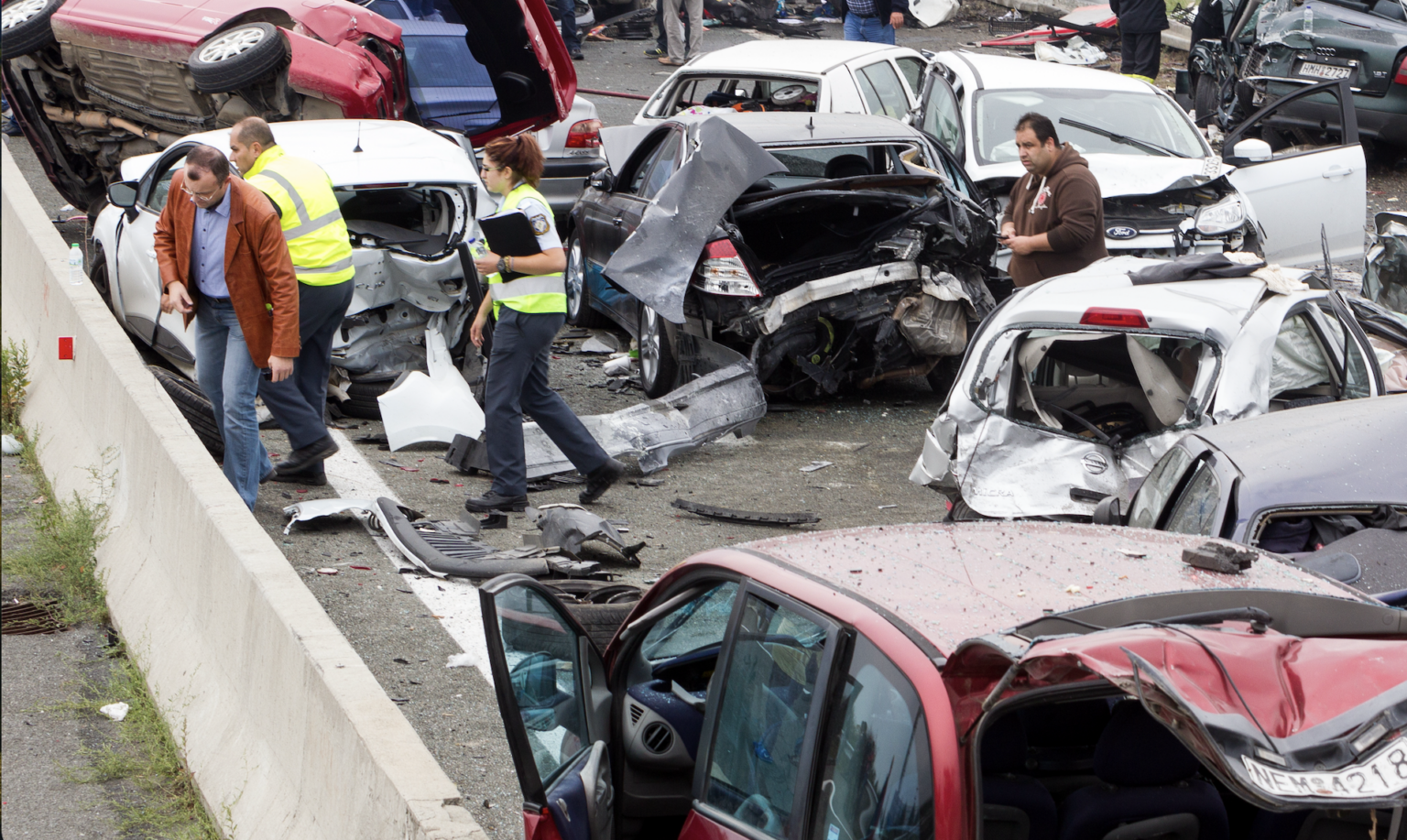
It usually happens in seconds. Traffic slows, someone taps their brakes, and suddenly there’s the sound of metal crunching, tires screeching, and cars colliding from multiple directions. When more than two vehicles are involved, the chaos can feel overwhelming. You may not even know who hit you or how many cars were part of the crash.
Multi-vehicle pile-up accidents are some of the most confusing and stressful crashes on the road. They often involve serious injuries, extensive vehicle damage, and complicated insurance questions. Unlike a two-car accident, responsibility isn’t always clear, and multiple insurance companies may be pointing fingers at one another.
If you or someone you love has been involved in a multi-car collision, understanding what to do next can make a meaningful difference. This guide breaks it all down in plain language, so you know how to protect your health, your rights, and your future.
Immediate Actions After a Multi-Vehicle Collision
The moments after a pile-up accident are often chaotic, but the steps you take can have a lasting impact on your physical recovery and any future insurance or legal claims. Here’s a step-by-step guide to help you stay focused when it matters most.
Step 1: Check for Injuries and Get to Safety
Your health and safety should be the main priorities after any crash. Start by checking yourself and your passengers for injuries. If your vehicle is creating a hazard and you can safely move it, try to pull it out of traffic. If moving your vehicle isn’t possible, stay inside with your seatbelt on until help arrives, unless there is an immediate danger like fire or smoke.
Step 2: Call 911 Immediately
Always call 911 after a multi-vehicle accident. Even if it doesn’t seem like any of the accidents were serious, police officers can help assess the scene and create an official report of what happened, while EMS can help provide immediate medical care. If you felt more than one impact, it’s important to let the officer know so it can be included in the report. Having a police report can be critical later on when adjusters try to determine fault.
Step 3: Document the Scene Thoroughly
If you are physically able, take photos and videos of everything! Take pictures of all vehicles involved, including their license plate and all visible damage. Include photos of skid marks, debris, and the final resting place of all vehicles if it is safe to do so. Also, if you’reable to capture the weather and road conditions at the time of the crash, try to get at least one photo or video. This will come in handy if the insurance adjuster tries to use weather as a factor to minimize your claim. Ultimately, in a pile-up accident, details matter. The more documentation you gather at the scene, the better.
Step 4: Gather Information from Everyone Involved
When there are multiple vehicles involved in a wreck, it can be difficult to pin down every single person, but having their contact information may be critical to your claim. Try to collect everyone’s name and phone number at the very least. If you can get more information from them, collect their driver’s license number, insurance company and policy number, and the make, model, and color of their vehicle. If there were any other third-party witnesses, try to get their contact information, as well.
Step 5: Seek Medical Attention, Even If You Feel “Fine”
After a car accident, having an EMT check you out is always your best bet. However, if an ambulance doesn’t arrive at the scene or you choose not to be assessed by an EMT, go to your primary care doctor, the emergency room, or urgent care as soon as possible. Even if you think you feel fine, many injuries from car accidents don’t show up right away. Unlike cuts and bruises, whiplash, concussions, and other internal injuries may be masked by adrenaline, and symptoms may not show up right away. Getting medical care as soon as possible protects your health and creates documentation linking your injuries to the accident.
Step 6: Keep Detailed Records
After any crash, keeping as many detailed records as possible will help protect and strengthen your claim. This includes keeping copies of all medical records and bills, police reports, tow fees and repair estimates, and notes or transcripts from any conversations you have had with other drivers and insurance adjusters. This paper trail becomes extremely important when multiple insurance companies are involved.
Step 7: Call a Personal Injury Attorney
Multi-vehicle accidents often involve several insurance adjusters, each looking to limit their company’s responsibility. Having an experienced personal injury attorney on your side helps protect you from being unfairly blamed or having your injuries minimized. When multiple vehicles are involved, the stakes are higher, and so is the complexity.
Whose Insurance Pays in a Multi-Car Pile-Up?
One of the most common questions after a pile-up accident is, “Whose insurance is responsible?” Unfortunately, there isn’t a black-and-white answer to this question.
In multi-vehicle collisions, each incident is evaluated individually. Investigators look at the sequence of events to determine who caused the initial crash and how other drivers may have contributed.
Shared Fault for Multi-Car Crashes
The driver who caused the first impact may be found largely at fault, but other drivers can also share responsibility. For example, if other drivers were tailgating or following too closely, speeding, or distracted, this could have prevented them from braking in time. Because of this, it’s not uncommon for fault to be divided among several drivers, especially in chain-reaction crashes.
Comparative Negligence in Texas
Texas is an at-fault state, which means whoever caused the accident is usually who pays for damages. However, Texas law allows comparative negligence, meaning multiple drivers can be liable for the same crash. When fault is shared, insurance companies may try to reduce what they pay by arguing you were partially responsible.
Using Your Own Insurance Policy and PIP Coverage
In a multi-vehicle pile-up, you may need to rely on your own insurance coverage to get the care you need, especially in the early stages. Every insurance policy has limits. When multiple people are injured in the same accident, the at-fault driver’s policy may not be enough to cover everyone’s medical expenses and damages.
If your policy includes Personal Injury Protection (PIP), it can help cover medical bills and lost wages regardless of who was at fault. Your own private health insurance can also help cover ongoing medical treatment. However, it’s important to keep detailed documentation of any medical treatment you receive and how it’s paid for, as some health insurance plans may ask to be reimbursed for payments made toward your medical care if you recover money from the at-fault driver’s insurance.
Why Multi-Vehicle Pile-Ups Are So Complicated
Multi-vehicle car accidents are much different than your typical two-car accident. There are more people involved, which means multiple insurance companies competing for a shared interest – saving themselves as much money as possible. When you tie this with conflicting witness statements or disputes over how the accident happened, it’s likely that insurance will use this as an excuse to minimize your claim or dismiss it completely.
Not to mention, multi-car pile-ups typically result in serious injuries that require time to fully diagnose. Accident reconstruction experts may be needed to determine how the crash actually happened. All the while, insurance companies are delaying the process as much as possible. That’s why it’s so important to have an attorney on your side who understands how this process works and can fight for the full value of your injuries.
Multi-vehicle pile-up accidents are overwhelming, but you don’t have to try to figure it out on your own. Call a trusted car accident attorney in your area who is experienced in dealing with complex car accident cases. Most personal injury attorneys offer free consultations and work on a contingency fee basis, meaning it doesn’t cost you anything to reach out and get help with your case. If you win, your attorney will deduct their fees from your final settlement. If you lose, you don’t have to pay them anything. You really don’t have anything to lose and potentially everything to gain.
Frequently Asked Questions About Multi-Vehicle Pile-Up Accidents
What is considered a multi-vehicle pile-up?
A multi-vehicle pile-up involves three or more vehicles in a single collision or chain-reaction crash.
Can more than one driver be at fault in a multi-car pile-up accident?
Yes. In Texas, fault is often shared among multiple drivers if their actions contributed to the accident. This is called comparative negligence.
Should I talk to the insurance company without a lawyer?
You can report the accident, but it’s wise to avoid giving recorded statements until you’ve spoken with an attorney, especially when multiple insurers are involved.
What if I don’t know who hit me first in a multi-vehicle car accident?
This is common in pile-up accidents. Investigators use evidence, witness statements, and vehicle damage to determine the sequence of events. If fault can’t be determined, your attorney may hire an accident reconstructionist to come in.
How long do I have to file a claim?
Deadlines vary by state, but in Texas, you have 2 years from the time of the accident to file a lawsuit. Speaking with a personal injury attorney as soon as possible helps prevent you from missing important filing deadlines.